
Forgotten Cities of the Winter Olympics
Winter vs. Summer
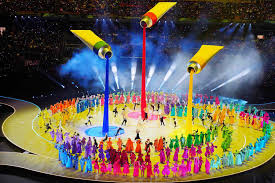
The Summer Olympics often find themselves being hosted by some of the most important and influential cities in the world. Athens (the original organizer), Los Angeles, London, Rome, Sydney, Tokyo, Barcelona and, most recently, Paris. These municipalities are the centers of business, trade, and commerce both on their respective continents and also on a global scale. Given that the summer olympics have been put on by these booming metropolises, one would only assume that the winter version of the competition would follow a similar suit, right? Well, I’ll give you a list of some communities that have hosted the Winter Olympics over the years and you can be the decider: Albertville, France; Lillehammer, Norway; Nagano, Japan; Cortina d’Ampezzo, Italy (it’s hosting it again, kind of?), and Garmish-Partenkirchen, Germany. By now you probably get the point. While the summer competition has visited the top cities in the world, Winter Olympic hosts have been much more niche. There are logical reasons for this, however. Not the least of which being the fact that for sports like skiing and snowboarding, an ideal terrain is needed. Most of the time large cities don’t fit the profile of the mountainous and wide open scenery needed to host these events. Also, many Winter Olympic host cities were already very popular resort destinations during the colder months, which no doubt, would have made them catch the eye of the IOC (International Olympic Committee). Likewise, most of these cities hosted the competition in the far past, when the Olympics weren’t as commercial as they are today. In this week’s article, we’re going to give some love to five host cities that you may have forgotten about over the years by discussing what happened when they organized the event and highlighting special aspects of the villages themselves.
Chamonix, France
The Event
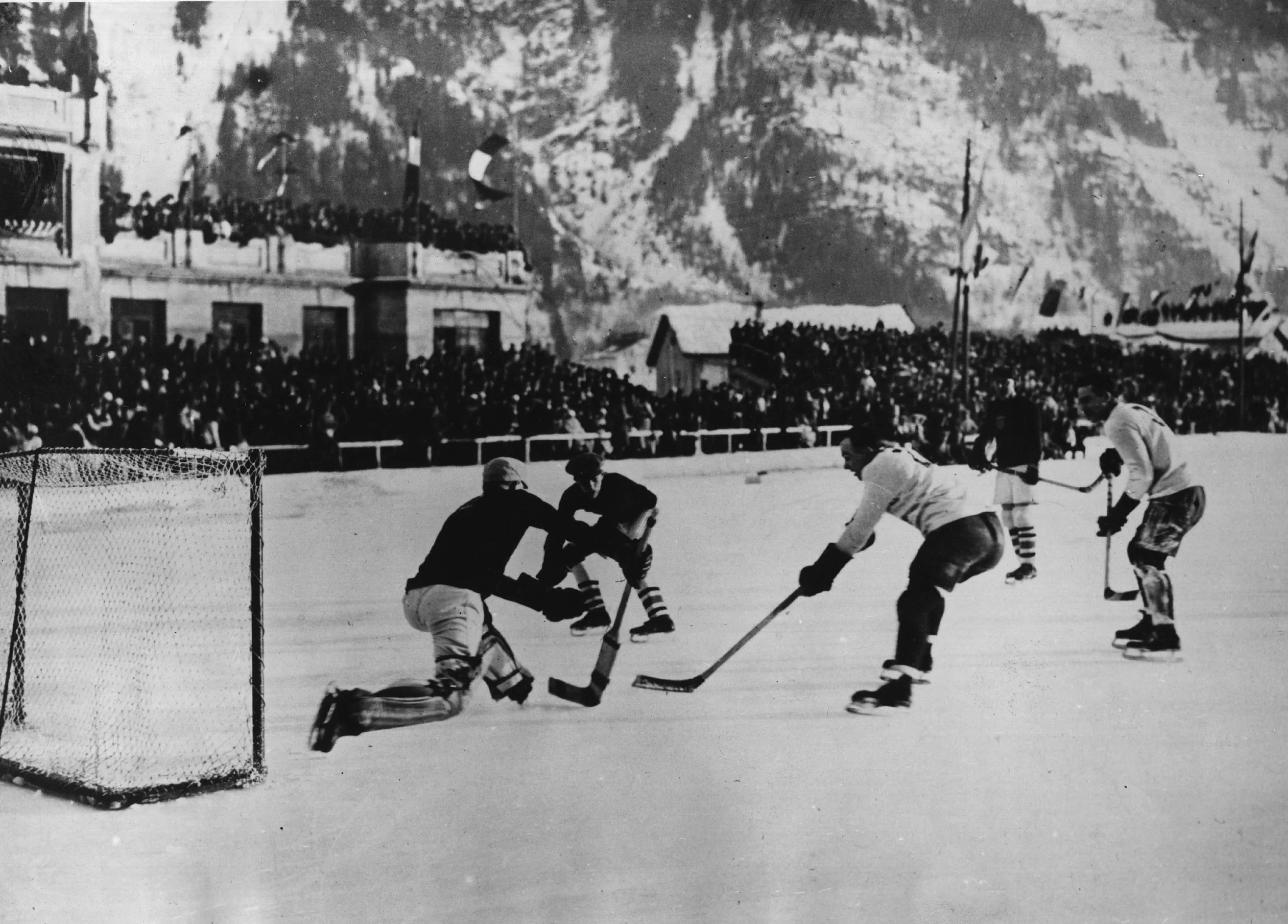
The very first Winter Olympics were held in the highland town of Chamonix, France from January 25-February 5, 1924. In fact, it wasn’t even called the Winter Olympics, with the name of “International Winter Sports Week” being favored and its more famous name only being added retroactively. Sixteen countries competed in nine total events. Incredibly, France did not win a single gold medal even though they were the hosts of the event. These inaugural games were also the only time the sport of military patrol (a mix of cross country skiing and shooting—but in teams) was officially featured.
The Town
Chamonix (official name Chamonix-Mont Blanc) is located deep in the French Alps not far from the Swiss and Italian borders. It’s known for some of the best skiing in the world and Mount-Blanc stands as Western Europe’s highest peak. In addition to skiing, Chamonix is considered the birthplace of alpine hiking, with the first hiking club established there in 1786. The mountain itself remains very popular to climb, however, not all who set off to the summit live to tell the tale. It owns more climber deaths each year than Everest. This resort town also boasts the world’s oldest mountain guide company and the Blanc Tunnel, which connects northern and southern Europe.
St. Moritz, Switzerland
The Events
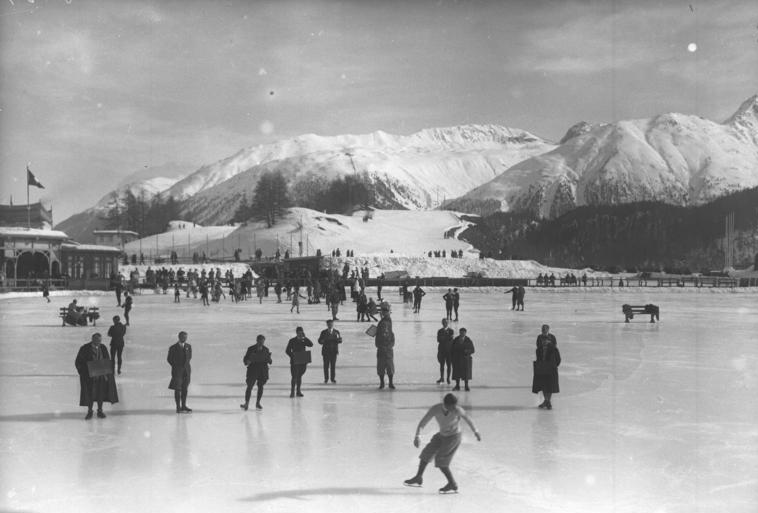
St. Moritz has hosted both the 1928 and 1948 editions of the games. The former year was when the Winter Olympics became, well, the “Winter Olympics” and they represented an official replacement of the Nordic Games, which had been held in Sweden since 1901. The 1928 Olympics were larger than their predecessor, and saw 25 nations make the trip to the Swiss Alps. However, unlike four years before, the weather this time around was far from ideal. After an opening ceremony where the thermometer read 0 degrees fahrenheit, temps quickly went up–and up–and up, eventually reaching 77℉. This forced many events to be postponed and the 10,000 meter speed skating race to be cancelled altogether. The year’s cross country skiing race became infamous for contestants having to deal with miles of melting snow. On top of all that, huge amounts of rain plagued its final days.
Twenty years later, circumstances were much better. In fact, the 1948 installment of the Olympiad was the first major collective sporting event of any kind since World War II. St. Moritz was seen as the perfect location for this event because Switzerland, being forever neutral, was one of the few locales not involved in the war in any way. One of the bigger things this edition is known for was the incorporation of skeleton, now an Olympic mainstay.
The Town
St. Moritz is known as the “birthplace of winter tourism” and the author of this blog post can personally attest to how magical an ambience it creates. Predictably, it has attracted many high-end celebrities and wealthy people during the colder seasons. This is perhaps fitting seeing as it gets more days of sun on average a year (322) than Los Angeles and Las Vegas (hey, when does it snow, then?). The most iconic attraction that St. Moritz has is the lake that bears its name. This body of water is extremely popular to skate and snowshoe on during the winter and to boat on during the warmer months.
Squaw Valley, California, USA
The Event
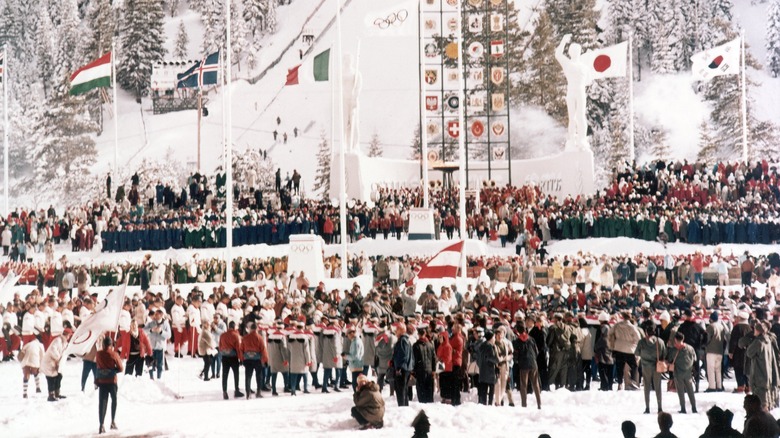
This version of the games was the second one to be hosted in the USA and took place from February 18-28, 1960. These Olympics were dominated by the Soviet Union (handily winning the most medals), but stand the most known for their lavish opening ceremony. The formality, which was almost cancelled by a snowstorm, was organized, in part, by none other than Walt Disney. The proceedings included, but were not limited to, fireworks, hundreds of balloons, ice statues, and about 2,000 pigeons that were painted white and called “doves.” Sitting vice president and 1960 presidential hopeful Richard Nixon was the man to officially declare the games open. The 1960 edition also boasted many “firsts” in Winter Olympic History. It was the first time a computer was used to calculate results, the first to utilize instant replay, and the first with live television coverage. 1960 also saw the US men’s ice hockey team win gold for the first time, although this fact is nearly forgotten today next to what happened twenty years later (more on that in a little while.)
The Town
The locale that the 1960 Winter Olympics were set in does not even have the same name anymore. In 2021, its name was officially changed to Palisades Tahoe after the term “squaw” was deemed offensive to Native American women. It is located in the Sierra Nevada Mountains, bordering the US state of Nevada. The resort that hosted in 1960 was founded by Wayne Poulsen, himself a skier who almost qualified for the 1932 games. When the Squaw Valley Resort opened in the 1950s, it showcased the longest double chairlift in the world. In fact, the spot was so impressive that, allegedly, after seeing pictures of it, the IOC switched the planned venue of the 1960 Olympiad from Innsbruck, Austria because they were so impressed with its amenities. Speaking of Innsbruck…..
Innsbruck, Austria
The Events
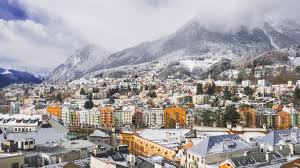
After missing out on holding the 1960 competition, the 5th largest city in Austria had the privilege of hosting in both 1964 and 1976. In the former version, the USSR again dominated and easily was the country with the most medals. Much like the 1928 Olympics in St. Moritz, the Austrians struggled with very warm weather in 1964. That February was the warmest in that region for 60 years and the Austrian army was forced to carry ice and snow to Innsbruck from miles away. To add insult to injury, the Austrian Alps finally received heavy snowfall…….the day after the closing ceremony. The premier Olympics to feature the sport of luge, things were further marred when Englishman Kazimierz Kay-Skrzypecki tragically died during a training run.
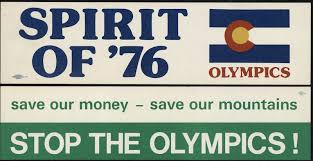
Twelve years later, circumstances were more in the organizers’ favor. However, the 1976 games were only placed back in Innsbruck after the original hosts Denver, USA (it was the USA’s 200th anniversary after all), had to back out because Colorado residents voted against funding the Olympics with their tax money. ‘76 was the inaugural year for ice dancing and saw Christl Haas (Austrian skier) be the first woman to light the iconic Olympic cauldron. Meanwhile the USSR continued their success in men’s hockey, winning their fourth consecutive gold.
The Town…Or City
As mentioned previously, Innsbruck stands as a major city in the country of Austria. So major that it represented one of the key hubs for the Nazi takeover of the country in 1938. Its name translates to “bridge over the inn” and is located right in the middle of Austria. This is unlike many other prime Alpine cities which are situated near borders of neighboring countries. The municipality was incorporated all the way back in the middle ages and several famous members of royalty can trace their upbringings to Innsbruck. These include Holy Roman Emperor Frederick III and Holy Roman Empress Anna of Tyrol.
Lake Placid, New York, USA
The Events
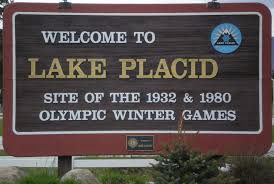
The smallest of all Olympic towns (winter or summer) also was the host of both the 1932 and 1980 versions of the games. Their first experience organizing was the initial Winter Olympics that took place outside of Europe, but was heavily crippled by the Great Depression. As such, only 17 countries sent athletes because of high travel expenses. 1932 was the inaugural year that an indoor rink was used for the figure skating competitions. Norway’s Sonja Henie took full advantage to win her second of three successive golds. The village of Lake Placid also had the first bobsled track outside of Europe built specially for the event.
48 years later, “LP” was back in the saddle to host from February 13-24, 1980. This time, 37 different nations were represented and artificial snow was utilized for the first time. These Olympics are perhaps most known for the “Miracle of Ice” which saw the US men’s hockey team win the gold medal and knock off four-time consecutive champions Soviet Russia in the semifinals (most would probably recognize Al Michael’s famous “Do you believe in miracles?” call). Americans continued to succeed as Eric Heiden broke records by winning five golds in speed skating. The Winter Olympics in 1980 turned out to be the only Olympiad that many countries participated in that year, as sixty different nations boycotted the summer games in Moscow.
The Town…Or Village
Lake Placid is actually an incorporated village of about 15,000 residents that sits in the greater town of North Elba, New York. The backdrop for this resort town is the Adirondack Mountains in upper New York State. Some even say the term “vacation” was first used in reference to people flocking to Lake Placid during 19th century winters. It was known for luxurious frozen getaways for aristocratic families such as the Rockefellers and the Vanderbilts. However, for all its fame surrounding the coldest season of the year, the village is consistently ranked among the best towns in America to experience Halloween. Who would have thought?
How Far We’ve Come
As we tune into the 2026 Winter Olympics in Milan-Cortina, Italy, we should take a moment to appreciate just how far the competition has come in 102 years. The aforementioned smaller cities and unremembered towns were the places that made the world event into the spectacle that we enjoy in modern times. They provided the younger Olympiad with resources, atmosphere, and stability that allowed it to gain fame that is now very close to its summer counterpart. If not for these resort mountain towns, we may still be sending athletes to the Nordic Games every few years. So, between watching hockey, figure skating, Alpine skiing and more, spare a thought this year for these five wonderful towns and their importance in the progression of the Winter Olympics.
 Yankee In Exile
Leave a comment