
1993 NCAA National Championship Game
The Fab Five
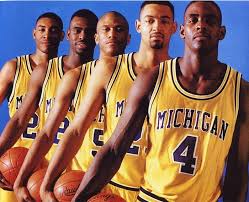
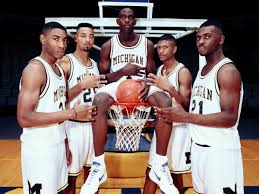
Many decades ago, when the Beatles broke onto the scene, they received an iconic nickname: The Fab Four. Apparently the moniker was a clever marketing campaign made up by their press officer. Almost thirty years later, another group of “fabulous” young men broke out at the University of Michigan and, while they may not have risen to international fame the way the Beatles did, they managed to capture national attention, especially among the highly sought after 18-34 year old male age group. One member’s name was Jalen Rose, a talented point guard from Detroit. Then there was Juwan Howard, a center from Chicago who later went on to coach the Wolverines. Jimmy King and Ray Jackson were two other highly rated players from Texas in the group. Then, there was Chris Webber, a power forward and the most coveted prospect of the squad. All five students were part of Michigan’s 1991 recruiting class, a class that many still consider to be the greatest of all time.
Almost instantaneously, they made their influence felt on America. This cohort of players was iconic with their baggy shorts, black socks, and outrageous attitudes. They possessed what many would call a “hip-hop style” and played the game in a fun, fast-paced fashion. Prior to the emergence of these five young gentlemen, college basketball was seen as somewhat stuffy or stuck-up. The manner in which the University of Michigan played during this time changed that all while driving large merchandise sales and high television ratings. Essentially, the Fab Five helped bring college basketball, and the rest of America, into the 1990s.
The fearless leader of this famous team was head coach Steve Fisher. Fisher, technically, had already won the national championship with Michigan in 1989. However, some didn’t see that as legitimate because he took over for the NCAA tournament only after UM dismissed former head coach Bill Freder for taking the Arizona State job (a story for another day). Together, Fisher and this prominent band of dudes had one goal on their agenda: win the University of Michigan another national championship. Let us see how that worked out for them.
1991-1992 Season: History Made
Webber, Rose, Howard, King, and Jackson had their Freshman year during this season. Before the age of the one and done, it was very rare for a college team to have a starting lineup consisting of all first year players (we’re actually going back to that level of rarity in the era of the transfer portal). However, these five announced to the nation that they were the real deal. They turned Michigan’s “down season” of 14 wins and 15 losses in 1990-1991 into a distant memory by winning 20 games in the regular season and only losing eight. They were ranked in the AP poll for the entirety of the term, as Webber became the first Freshman to lead the Big Ten in rebounds and Rose scored the second most points by a Freshman in school history. Somewhat underseeded as a 6 in the NCAA Tournament, they rolled through the first three rounds and shocked hated rival Ohio State in the Elite Eight.
It was now off to the Final Four at the Metrodome in Minneapolis (anyone else feeling nostalgic?). In the national semifinals, the Wolverines beat Cincinnati, another unlikely Final Four team, setting up a showdown with Mike Krzyzewski’s Duke in the title game. Krzyzewski’s team was the defending national champions and heavy favorites going into the contest. As it turns out, the book keepers were right this time around and the Blue Devils won handily. This second championship in as many years firmly established Duke basketball as the nation’s new juggernaut. However, all was not lost for UM. The tournament gave their upstart group of Freshman exposure to high stakes games and introduced the nation to the most famous five in the entire sport. They weren’t done either. The 1992 Final Four was only the beginning……
1992-1993 Season: The Fab Five Return
As was said, no one-and-dones yet, so this group of five all returned for their Sophomore seasons. In fact, Michigan’s top nine scorers from the 1991-1992 season came back to the team the next fall. They were ranked number one in the AP poll to start the season and were Vegas’ favorite to take home the NCAA title. In other words, no one was overlooking the Fab Five this time around. After falling to Duke in an epic rematch at Cameron Indoor Stadium, the Wolverines went out to Hawaii between Christmas and New Year’s to play in an in-season tournament called the Rainbow Classic. Here they re-claimed the number one place in the nation by beating a laundry list of top programs. The schools that were vanquished at the hands of the Wolverines were Nebraska, North Carolina, and Kansas all in back to back to back days. UM were champions in Hawaii, but a Dean Smith coached UNC took comfort in the confidence that they had experienced the Fab Five and knew they could beat them.
In Big Ten conference play, the Wolverines went 15-5, beating Purdue, rivals Michigan State, and Iowa. However, they did fall to Bobby Knight’s Indiana on two separate occasions. Overall, Michigan finished the regular season at 26-4 with no conference tournament played in the Big Ten. The Fab Five’s eyes, however, were firmly fixed on a larger prize, a championship that had eluded them the year before.
1993 NCAA Tournament
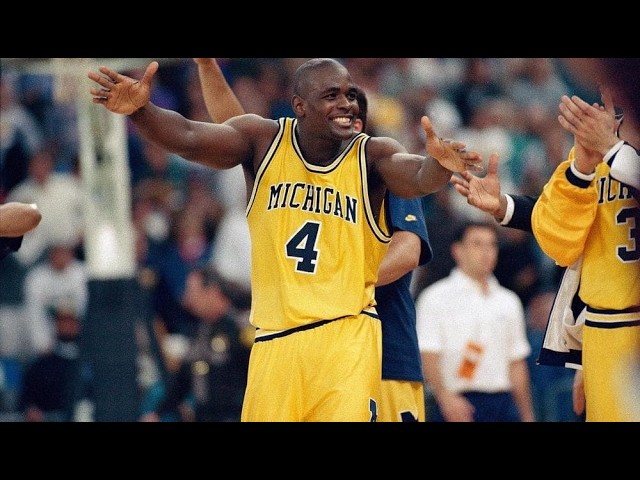
On Selection Sunday, the committee gave them the number 1 seed in the West Region. This was a far cry from their mid seed a year before. The McHale Center in Tucson, Arizona was the site of their first two games. In the desert, UM blew past Coastal Carolina but nearly lost their second round matchup to UCLA and needed overtime to squeak the game out. Still, they marched on to the regional championships in Seattle’s Kingdome. There, they easily defeated George Washington and Temple to reach their second Final Four in as many years. This time the location of college basketball’s premier event was the legendary Louisiana Superdome, a venue that could hold over 60,000 fans for an NCAA game. In the semi finals, Steve Fisher’s men came through victorious after a hard fought battle against Rick Pitino’s Kentucky. The Fab Five’s dream was still alive. They were sprinting back to the National Championship Game with a vengeance and truly believed they were the team of destiny in 1993. However, standing in between Michigan and their ultimate goal was none other than North Carolina, who had rebounded from their earlier defeat to the “Maize and Blue” to be selected as the number-one seed in the East. The matchup was set, the stage was gigantic, and the entire country was watching.
April 5, 1993
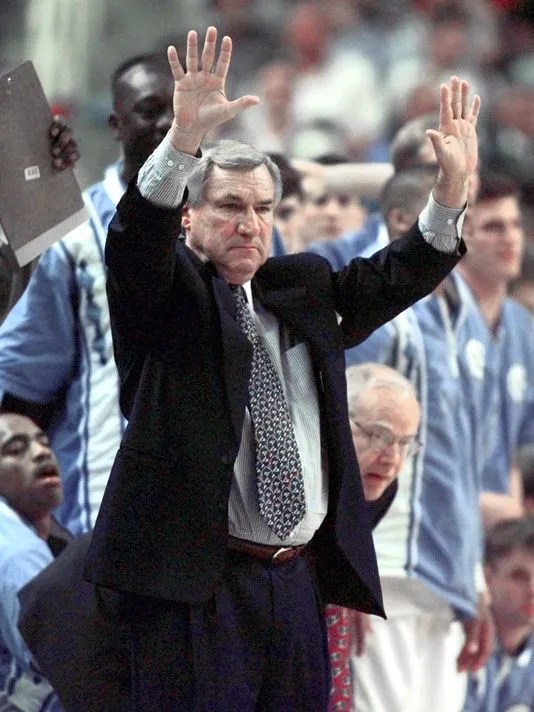
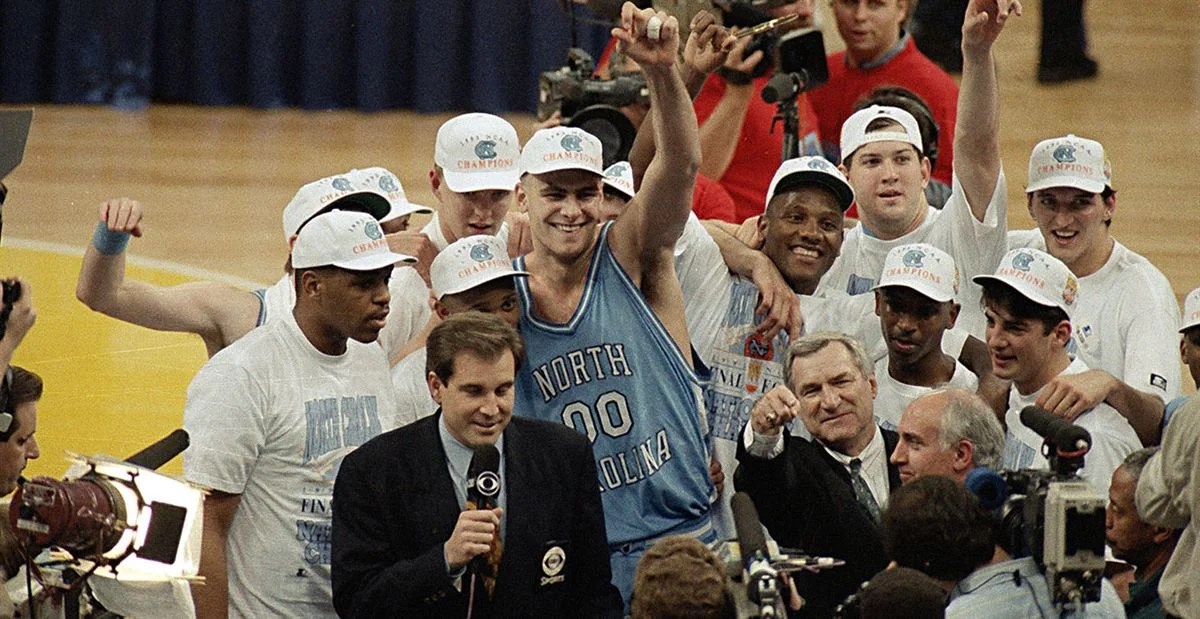
As you may have guessed, this was the date of the 1993 NCAA National Championship Basketball game between UM and UNC. Michigan was going for their second title in five years, meanwhile North Carolina was aiming to recapture the magic of the 1982 national championship which Michael Jordan helped them win in the same building. Overall, it was a very evenly matched basketball game that promised to deliver more excitement than a trip to Tropical Isle on Bourbon Street. The Tar Heels were actually two point favorites according to Vegas, and they nursed a 42-36 lead at halftime. Michigan powered back to take the lead for much of the second half, but a 9-0 UNC run down the stretch ensured them a 72-71 lead and put Pat Sullivan on the free throw line to try and extend it with 19 seconds left. Then, came the famous sequence. One of the most well known increments of time in the history of the sport.
Webber’s Adventure
Sullivan proceeded to make the first of his two free bees to put the score at 73-71 in favor of the team from Chapel Hill. He missed his second however, and Chris Webber grabbed the rebound. Now, Webber had been the best player on the floor for Michigan that night, as he was on many occasions. He had 23 points, and was pretty much the only reason that the Fab Five had hope left to win a title. But, basketball can be a cruel game. Things felt “off” from the get-go and the other four yellow jerseys ran upcourt with Webber left by himself. Jalen Rose did come back, however, but that seemed to throw things off even more. Right in front of a referee and the entire North Carolina bench, Webber clearly traveled. However, the officials didn’t call it. Their whistles never blew and play continued……
How this came to pass will always be beyond me, but, all one needs to do is watch the replay and see that a turnover should have been enforced right then and there. But, the play raged on and Webber, perhaps aided by the disbelief of stunned Tar Heel players, was able to dribble upcourt and soon found himself in a trap. Absentmindedly, he made the signal to call for a Michigan timeout. Except here’s the catch: Michigan had no time outs left. The referees couldn’t ignore this, and they whistled for a technical foul, the standard punishment for initiating a TO when a team has run out of them. Carolina got two free throws, the ball, and essentially, the game, as they went on to win 77-71. Many UNC fans must have felt that justice was indeed served after the missed traveling call. UM on the other hand, sunk into heartbreak. Webber had choked the game away and, for the second consecutive season, the Fab Five had lost in the National Championship Game. They would never play another game as a complete group again.
Aftermath
All in all, maybe North Carolina wanted the NCAA title just a little bit more. Their hated rivals from Tobacco Road had won the previous two seasons, and many felt that UNC was falling behind in the ACC pecking order. Dean Smith got a large monkey off his back by finally lifting a second trophy (1982). Interestingly enough, the Tar Heels made 11 Final Fours under his leadership, but only won it all those two times. “You can call it lucky. You can call it fortunate, but it still says NCAA championship”, Smith would proclaim after the game. Now let’s talk about the University of Michigan. The game in question marked the end of the Fab Five as we knew them. Webber left for the NBA Draft and became only the second Sophomore ever (Magic Johnson) to be drafted with the first overall pick. He was selected by the Magic, but was quickly traded to the Warriors in exchange for current University of Memphis head coach Penny Hardaway.
He went on to have a marvelous NBA tenure punctuated by his time with the Sacramento Kings. Today, his number hangs high above the rafters of the Golden 1 Center in Northern California. Rose and Howard left school after their Junior seasons and had noteworthy professional careers themselves. Fisher never really escaped the stigma of not being considered a legitimate championship winning head coach and was fired by UM in 1997 in the wake of the Ed Martin Scandal. He did eventually go on to spend many successful years at the helm of San Diego State. Let’s talk about the aforementioned scandal, though. An in-depth analysis of it requires a blog post for another day, but it involved a booster making payments to players to launder money because of an illegal gambling operation. Yeah, it’s a pretty convoluted story…….. This impropriety coming to light has caused the most famous five in CBB history to be somewhat estranged over the years. However, they have since reconciled and taken part in interviews and media together. The University of Michigan finally won its second national title this week, when Dusty May’s crew disposed of both Arizona and Uconn in Indianapolis.
Let’s end this post by going back to Chris Webber. Overall, he was way too great a player to be defined by an on court mistake he made over 30 years ago. But, basketball, like life, is brutal and isn’t always fair. The timeout that wasn’t has, to an extent, followed him throughout his life. He once stated, “If I had one game to show my children, it would be the timeout game. I was the best player on the floor, and it didn’t matter. The lesson is that you could have a great game and still lose, but learn to grow from it.” I think it’s safe to say with the success Webber had after 1993, that he did, in fact, achieve growth from a troubled 19 seconds that night in the Crescent City.
 Yankee In Exile
Leave a comment