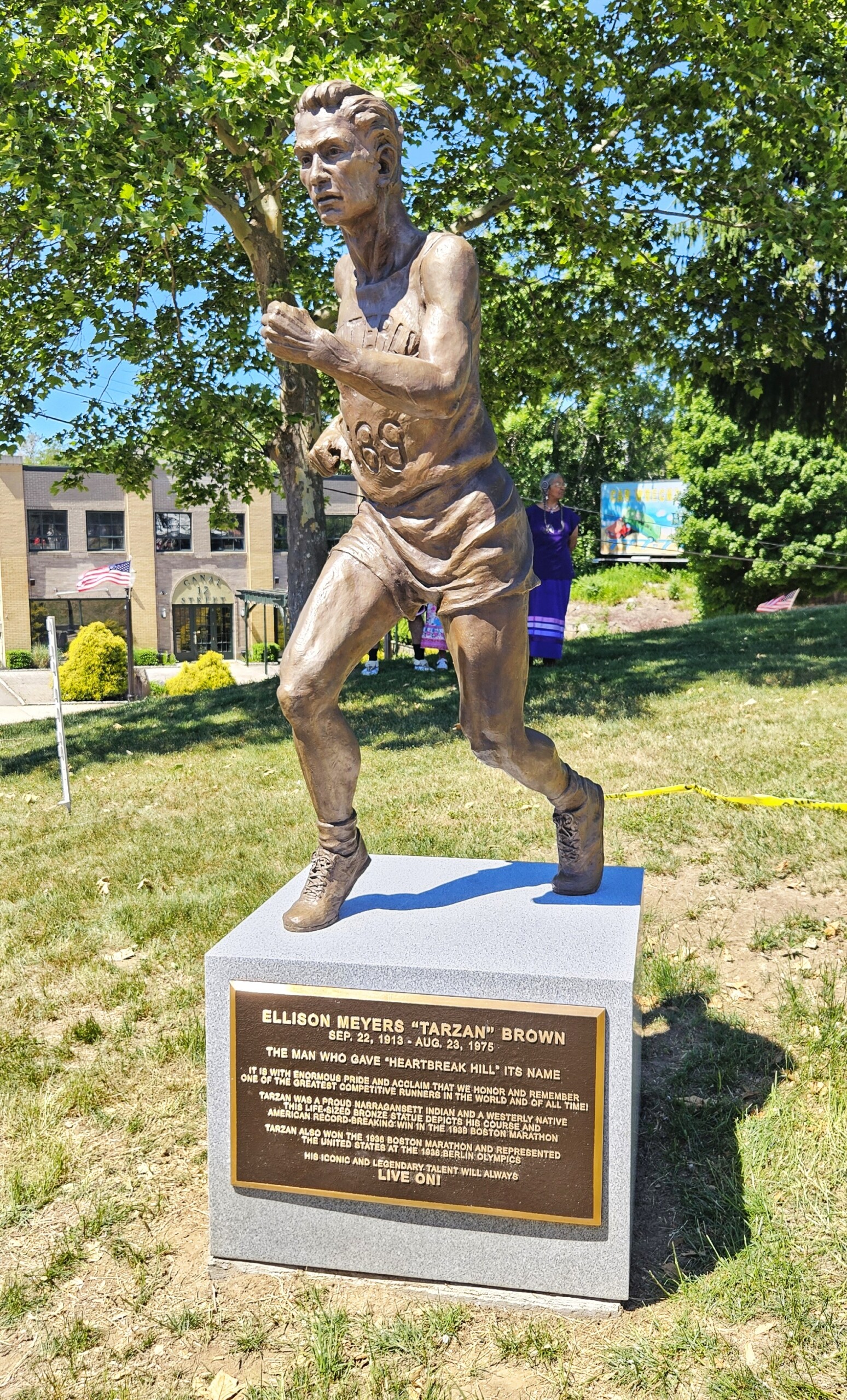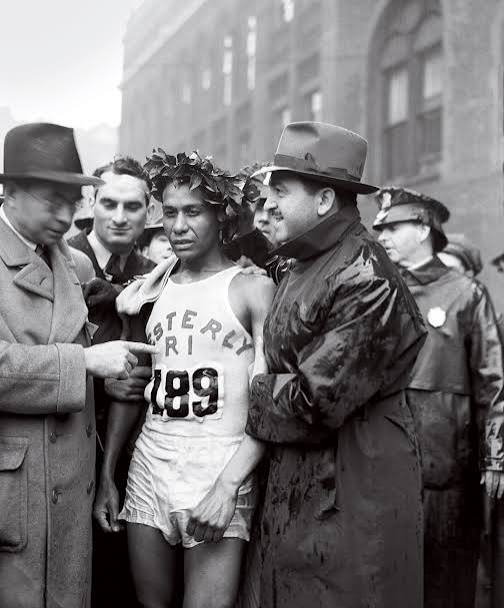
Ellison Myers Brown was born in Westerly, Rhode Island on September 22, 1913. He was a member of the Narragansett Tribe and took the traditional tribal name of “Deerfoot.” However, as a young boy he became notorious for climbing and swinging from trees all across southern Rhode Island, hence he embraced the moniker that would define him: Tarzan. In his youth, he loved to run. Heck, his uncle was a competitive runner. For Brown, though, who grew up in poverty, there really wasn’t a ton of time to take part in the sport that he loved. In seventh grade, he dropped out of the Tomaquag School and began training as a stonemason. This was during the Great Depression though, and work was hard to come by. This predicament was made even more challenging by the fact that many businesses in the 1930s wouldn’t hire Native Americans. With his family struggling, Tarzan gravitated back to what he did best. He began running in races to win cash prizes for his loved ones. Some members of his family even claimed he would let others take first place if he thought his family needed the prize for second position more.
The Legend of Heartbreak Hill
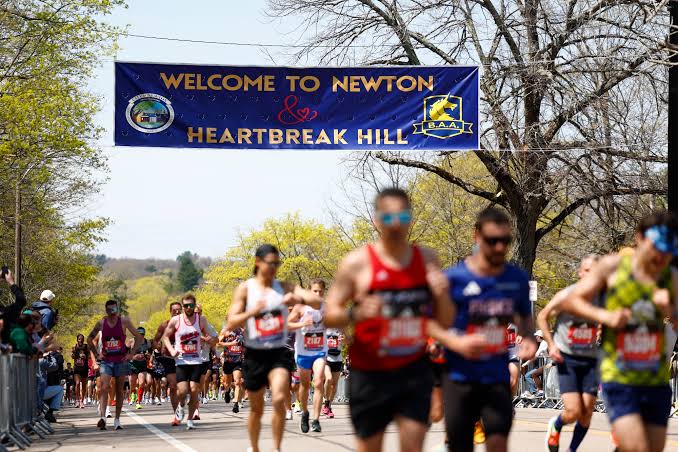
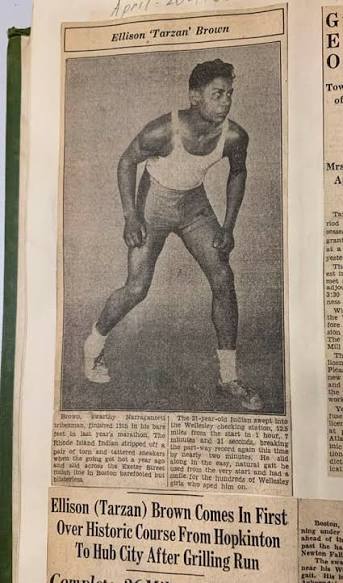
A rekindlement born out of necessity led to Brown entering the 1935 Boston Marathon. He was still so poor that he didn’t own a pair of quality running shoes. So, unfortunately, his sneakers gave out two thirds of the way through the race. Incredibly, Tarzan still placed 13th, crossing the finish line barefoot. But, it was what happened in the next year’s (1936) beantown race that put Tarzan Brown on the map. The Rhode Island native was leading the race as he approached mile 20 and the notorious hill that came along with it. As Brown was running up said hill, Massachusetts’ Johnny Kelley, the defending champion, passed him and gave Tarzan a small “pat” on the back as he did. That gesture motivated Brown to such an extent that he found some added energy and motored past Kelley on that very hill. Brown led the marathon the rest of the day and finished as the champion for 1936. To this day the hill in Newton on mile 20 is called “Heartbreak Hill” because Tarzan “broke Kelley’s heart” and passed the former champ.
Other Running Feats
This spectacular victory earned Brown a place on the 1936 Berlin Olympics team and he was shipped to Nazi Germany for the event. However, he sustained an injury and never ended up competing in the Olympic Marathon. The American media was tough on the runner from Rhode Island and insulted him for the withdrawal whenever they could. To prove his doubters wrong, Tarzan competed in, and won marathons on back-to-back days in Port Chester, New York and Manchester, New Hampshire in the latter part of 1936. Not to be outdone, Brown again won the Boston Marathon in 1939, setting the American men’s all-time record for marathon time while he was at it. What’s more is that in 1940, he would break his own marathon record in Salisbury Beach, Massachusetts. Yet again, he was named to the 1940 Olympic team and looked set to redeem himself, yet this time the Olympics were cancelled due to the outbreak of World War II.
His Sad Death
Burnt out, Tarzan Brown retired from competitive running shortly thereafter. On August 23, 1975, he met a tragic end. While there are many varying accounts as to what happened that night, the consensus seems to be that, following an altercation, Brown was struck and killed by a vehicle outside a bar in the Misquamicut section of Westerly. Police arrested a man from Middletown, Connecticut for his death. Tarzan Brown was only 62 years old. A sad end for a forgotten marathon legend.