
Phillies vs. Giants- April 11, 1907
The Weather Report
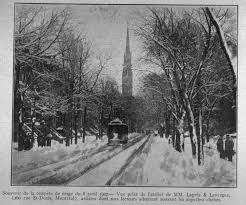
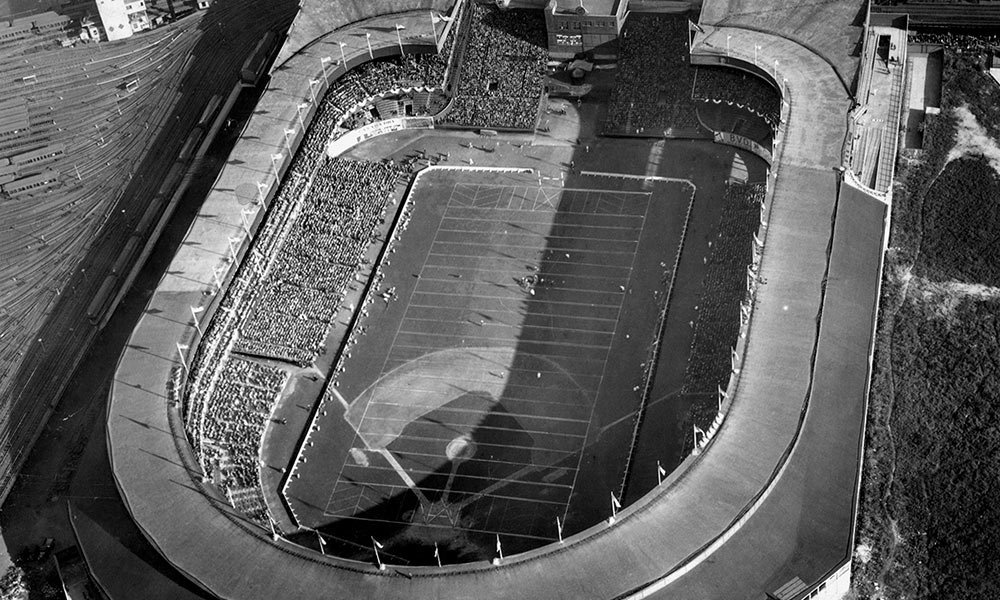
It was Opening Day in the MLB in 1907, and it really wasn’t an ideal time for New York City to have its first April snowfall in 32 years! Yes, for the first time since 1875, Central Park reported 5.8 inches of snow on April 10th. It was the final snow event in what had proved to be a long, cold winter for NYC (much like this past one). Postponing the New York Giants’ opening day fixture at the Polo Grounds was under consideration. However, it was decided that the grounds crew at the legendary stadium was more than equipped to handle less than a half a foot of snow. So they got to work, and they worked, and they worked, and they continued to work. They dumped some of the snow into the nearby Harlem River, but the majority of the powder was simply shoveled into the vast amount of foul territory at the ballpark. With the temperature warming up to a reasonable 52 degrees Fahrenheit by gametime, it seemed as though the Philadelphia Phillies and the New York Giants were clear to play the game and that Opening Day in 1907 could commence as usual.
What Could Possibly Go Wrong?
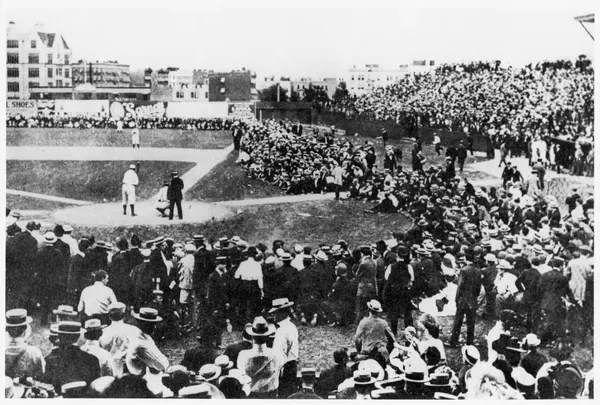
The only problem was most of the snow sat in the infamous Polo Grounds shadows, away from where sunlight or the warming temperature could have much effect on it. I suppose given that the ballpark was in its 16th year, and there had never been snow during the baseball season for the entirety of its existence, the groundskeepers found themselves in uncharted territory. The snowy situation kept almost no fans home, however, as the Giants recorded around 18,000 fans that day, which was more than the capacity of the Harlem stadium at the time. To increase the amount of spectators that could attend, the home team set up seats behind a guard rail on the field of play, right near the snow piles. In fact, the only person who seemed to miss the date in question was Giants’ manager (and our old friend from a past blog), John McGraw, who was home sick in bed. This particular game also featured virtually no on site police officers, as the NYPD had instructed the Giants to hire their own private security. SPOILER ALERT: They really didn’t. If you’re sitting there thinking to yourself: Yep, this sounds like it would be a recipe for disaster, you couldn’t be more correct.
Frank Corridon
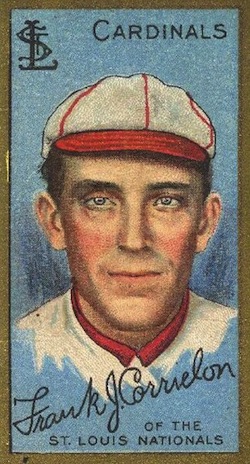
The unfortunate focus of the drama that would soon unfold was the pitcher for the opposing team. He’s a man who has been lost to baseball history, but who lived an incredible life. Let’s talk about Phillies pitcher Frank Corridon. Born to Irish immigrants in Newport, Rhode Island, Corridon spent most of his youth and teen years playing for various local teams including the fabled Providence Grays. However, the man from Aquidneck Island had another talent: He was also a professional level violinist. Taking up study of the musical instrument at his mother’s behest, he attended the New England Conservatory of Music in Boston. He later went on to play in the Providence Orchestra and even organized a glee club with his Phillies teammates.
However, the thing that Corridon is most remembered for (at least to those who recall him) was that he was allegedly the man who invented the spitball. Whether or not you believe that he conjured up the pitch in Providence one day, the fact remains that, when he got to the big leagues, he very seldom used the pitch, preferring his fastball and curve instead. A seemingly perpetually ill man, while he was playing in the minors, Corridon nearly died of phenomena, and struggled with kidney disease for much of his later life. He had even left the Phillies for a year in 1906 in order to join the Pennsylvania-based Tri-State League, a renegade professional baseball outfit. Back in the “City of Brotherly Love” in 1907, he was trusted enough to be given the baseball on Opening Day. It would be his first start in the MLB for over a year and a half. Let’s see how he fared……..
Snowball Fight!
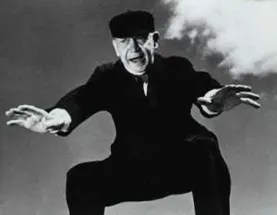
As it turned out, the 26-year old righty was pitching pretty damn well into the 8th inning and the Phillies led the Giants 3-0 at that point. Fans were so frustrated (and, most likely, intoxicated) by Corridon’s gem and the Giants’ poor play that they started to take matters into their own hands. Spectators picked up snow from the drifts in foul territory, fashioned the substance into snowballs and began throwing them at Corridon and the Phillies players. Then, some fans, upset at how poorly the Giants had played, started pelting their own team with the icy balls. Umpire Bill Klem tried to restore order. Giants players pleaded with the home fans to stop. However, the melee simply got worse. Seat cushions and beer glasses were now being thrown and then, somewhere in center field, it happened……..a few fans rushed onto the field.
Before anyone could blink an eye, it is estimated that about 10,000 attendees were now occupying the cold Polo Grounds grass. Let’s now remember the aforementioned lack of security, and one can probably deduce that not much could be done about these raucous fans. Klem apparently gave the Giants 15 minutes to clear all fanatics from the playing surface. The New York team had no chance in hell to do so. The umpire ended up forfeiting the game to the Phillies, who may have won anyway considering how dominant Corridon was pitching. That was that. Surprisingly, it has been written that the fans peacefully went home after learning they were the cause of the Giants’ forfeiture. Perhaps realizing they had gotten carried away by the magic of snowfall, the influence of peer pressure, and straight up liquid courage.
Aftermath
It won’t take a rocket scientist to guess that, after this incident, the Giants increased security personnel at the Polo Grounds. They also built a chicken wire fence in front of the bleachers to keep fans from entering the field. The Phillies finished in 3rd in 1907 and the Giants, 4th. Both were very distantly behind the pennant and World Series winning Chicago Cubs (who in the 119 years since, have only won two more World Series). Corridon continued to play for the Phillies for several more years, and ended his MLB tenure as a St. Louis Cardinal. He later managed his high school team (Rogers High in Newport) and even a team at the Newport Naval Training Station during World War I. He married, had five daughters, and moved up to Syracuse, New York where he died a few decades later.
Now let’s talk about Bill Klem, the hero of the day whose calm composure was desperately needed in the anarchy of the 8th inning. A young man in blue in 1907, he went on to become a very respected umpire in the National League for 37 years. 42 years later, and nearing the end of his life, Klem was honored with a night of his own at the very same ballpark that his most difficult day on the diamond occurred: The Polo Grounds in Harlem. Quite often when a negative event happens, people focus on the bad acts done and the “bad” people that were involved in it. As we enjoy the beginning of baseball season, let us think of the nearly forgotten 1907 game and consider the two men that performed their tasks best. Two men who lived magnificent albeit quiet, and forgotten lives. Bill Klem and Frank Corridon.
 Yankee In Exile
Leave a comment