
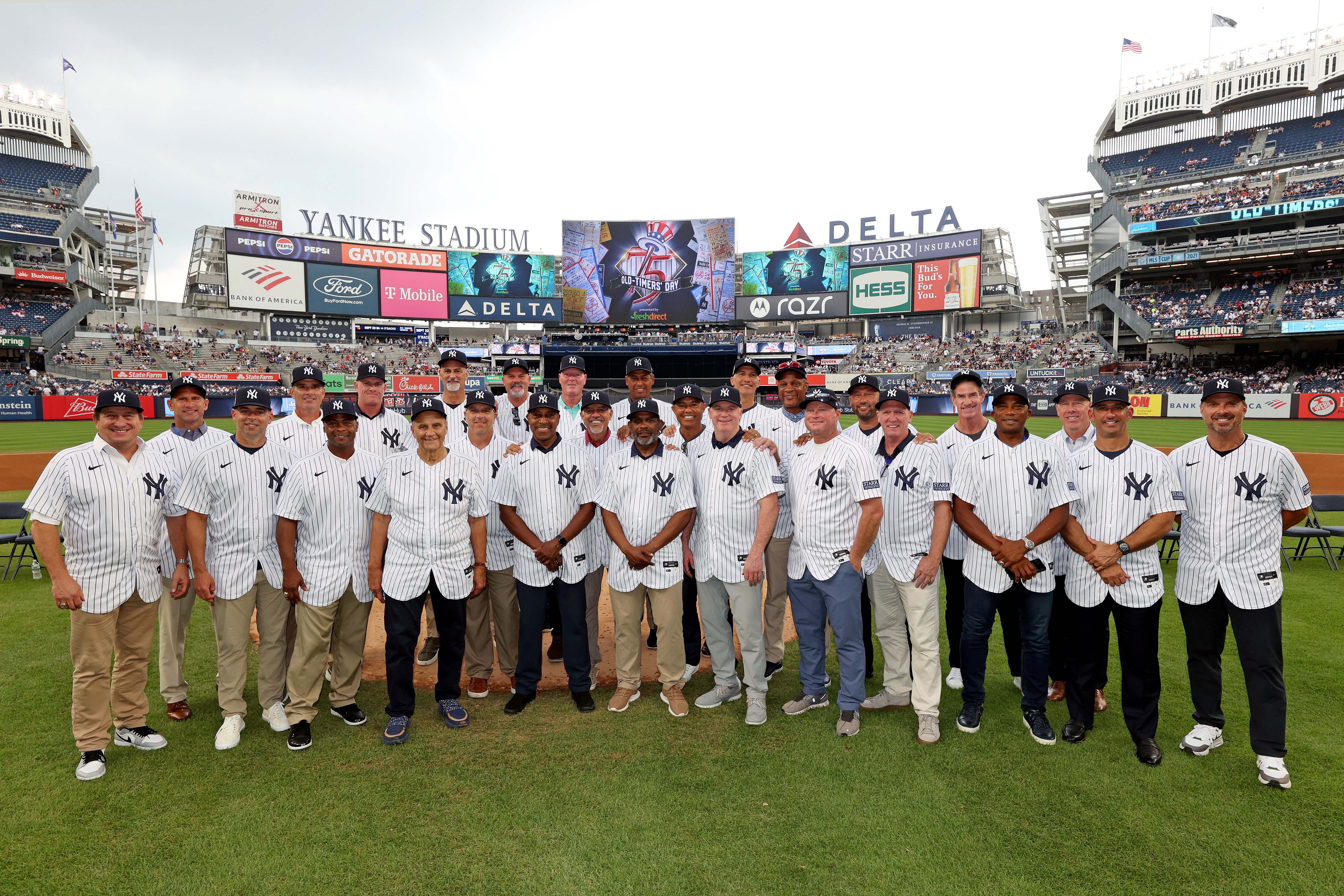
The Team
Second base, Chuck Knoblauch. Shortstop, Derek Jeter. Right Fielder, Paul O’Neill. Centerfielder, Bernie Williams. First base, Tino Martinez. Designated hitter, Chili Davis. Third base, Scott Brosius. Catcher, Joe Girardi. Left field, Chad Curtis.
Coming off the bench was a young catcher named Jorge Posada, a veteran base stealer called Tim Raines, a popular slugging DH Darryl Strawberry, and rookies named Homer Bush, Ricky Ledee, and Shane Spencer.
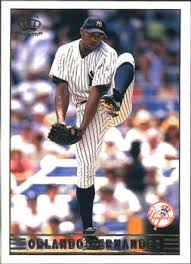
Their starting rotation was led by ace Andy Pettitte, who at 26 years old, was already one of the best pitchers in the American League. David Cone, the only 20 game winner on the staff, came next and, after him, a brash, passionate lefty named David Wells. Supplementing these three were Orlando Hernandez or “El Duque” (The Duke) who fled his native Cuba to come to America a few months earlier. Then there was Hideki Irabu, a Japanese pitcher who the Yankees had brought in to much fanfare the year before.
Their bullpen was baseball’s best, as usual. Anchored by a 28-year old named Mariano Rivera (maybe you heard of him?). Set-up men such as Jeff Nelson, Mike Stanton, and Ramiro Mendoza also proved to be reliable as did left handed specialist Graeme Lloyd.
The manager of this legendary squad was Joe Torre.
A Winning Machine
I don’t know about you, but when I read the list of the players on this ‘98 Yankees team, the only two names that really jump out at me are Derek Jeter and Mariano Rivera. They are the two Hall of Famers in the group and their names are pretty much household for any baseball fan, whether they root for the Yankees or not. This stands in direct contrast to the 1927 Bronx Bombers that had seven future Hall members in their dugout. While the aforementioned names are very good players, does this team, on paper, seem like the group that would break the record for most total wins in a complete baseball season? Do they strike you as the type that would (at the time) have the most victories in a 162-game regular season? Do they seem like they would have lost only twice in three postseason rounds? Would you predict they would have a higher winning percentage than the 1961 Yankees or the Bombers of the late 30s with Lou Gehrig and Joe Dimaggio? Would you believe they also had more frequent victories than the famous Big Red Machine or Swinging A’s of the 1970s? Or the 1960s Dodger juggernaut?
Well, this team chock full of good to great players were, statistically, better winners than all of those famous outfits from the past. Their secret? Instead of a group of superstars, they were simply a group of ruthless ball players who played the game the right way and rarely made mistakes. As Derek Jeter said about the team: “Every single day, we wanted to beat you.” On most days, they did. They had scary good pitching both with their starters and in the bullpen. In the entire lineup, there were no automatic outs. Every hitter made you work. Opposing pitchers simply received no breaks. Their team mentality carried them far, and the fact that there were no celebrities (Jeter and Rivera were still young and hadn’t quite reached that level yet) among them worked in their favor. It fostered a sense of collective, an aura of unity. There were no distractions and nothing fancy happened on the day to day. The ‘98 Yankees didn’t even have a cool nickname like “Murderer’s Row.” Plain and simple, they were just a profound winning machine.
Records
As such, the 1998 Yanks didn’t actually break all that many records. However, they do have a few to serve as feathers in their caps. Most significantly, their complete win total of 125 still stands the test of time as the most ever by an MLB team in one season. Their 114 regular season wins is also the most by any team in Yankee history (although the ‘27 team had a slightly higher winning percentage). In fact, the aforementioned victory tally was the most in American League history at the time before it was broken by the 2001 Seattle Mariners (who didn’t even end up winning the pennant). Their 11-2 record in the playoffs also serves as the best since the 1995 postseason expansion. Perhaps, though, these record stats don’t tell the full story. So, next are some numbers that, even though they’ve been replicated, are still equally as staggering.
Important Numbers
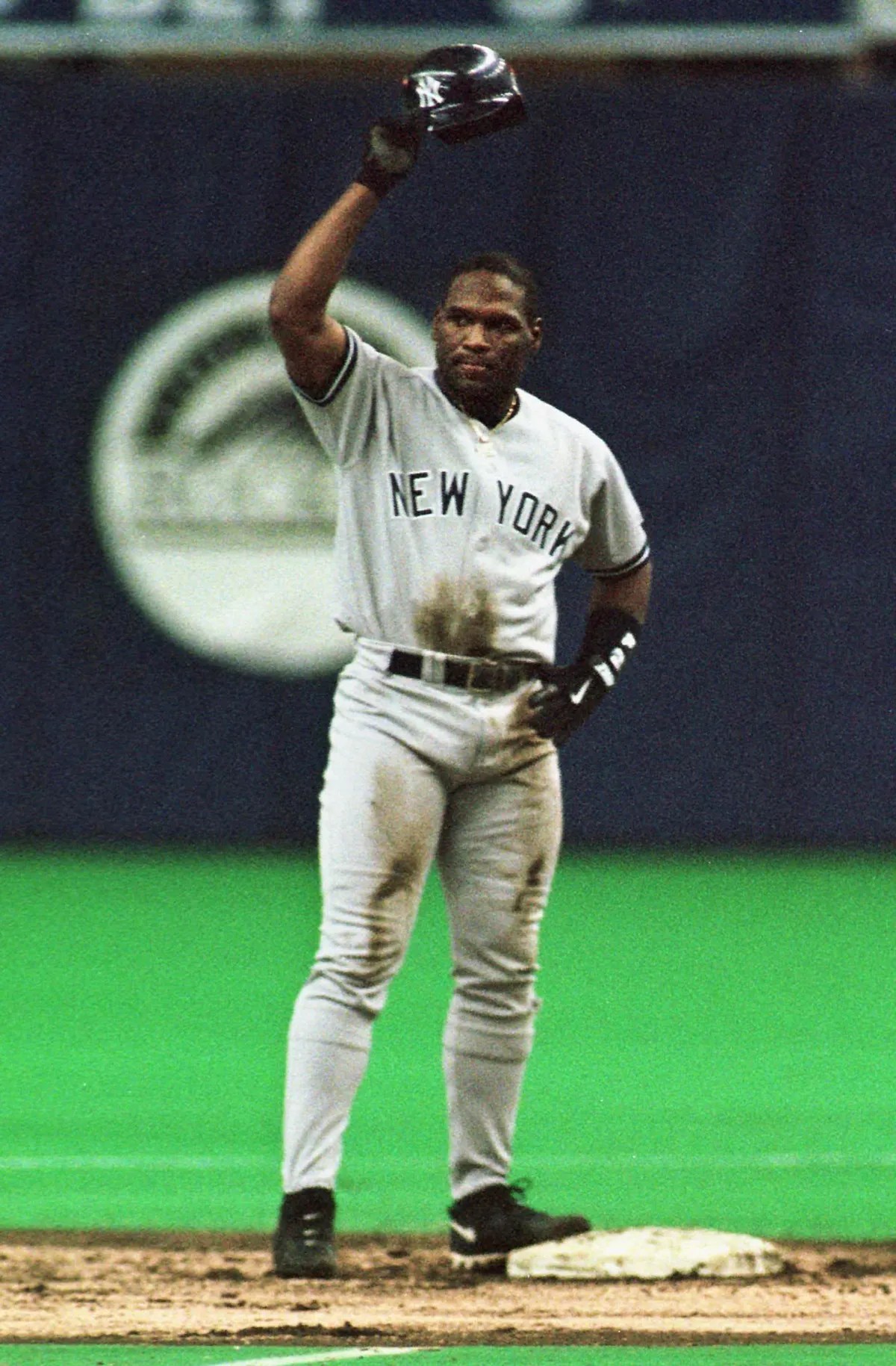
The ‘98 Bombers led the league in runs scored with 965 and also led the game in RBIs and on-base percentage. Bernie Williams won the batting title with an average of .339 (although he only played in 128 games due to injury). They had the sixth best team era in baseball at 3.82 and Mariano Rivera, in only his second year as the team’s closer, posted an outstanding 1.91 earned run average with 36 saves. At the All-Star Break, the Yankees were 61-20. Think about that. They were 41 games over .500………at the All-Star Break! As I’m currently typing this, the 2026 Yankees have now gone 6 straight series without a loss and people have begun to get excited about this year’s team as a result. Well, the 1998 version went 24 consecutive series without losing. It’s amazing just to think about. They clinched a playoff berth in August and sewed up the division in early September, with three weeks still left to go in the season. The second place Red Sox won 92 games. That was the second best record in the American League and would have been good enough to win both the AL Central and AL West divisions during that same season. Instead, the BoSox found themselves finishing 22 games behind the Yankees in the AL East.
When the season was finished, the Bronx Bombers not only scored the most runs but also gave up the fewest. I’d say if you can outscore all of your opponents while also allowing less runs than all of the opposition, you’re going to have yourself a pretty damn good year. Lastly, let’s look at the injury report. I know that with the modern Yankees, many fans complain that too many players get injured too often. However, the 1998 squad also had its fair share of ailments. Bernie Williams, their best hitter, missed almost two months with a sprained right knee. Darryl Strawberry was diagnosed with colon cancer and missed the final part of the season. Mariano Rivera missed several weeks early in the season due to a groin strain. Even David Cone missed some time after being bitten by his parents’ Jack Russell terrier, Veronica. But the ‘98 Yanks were a very deep team and didn’t get fazed when one of its members went down. It was always about the “next guy up” and, as has been already established, they had a lot of good athletes that were more than ready to step to the occasion when the time came.
Brilliant Roster Construction
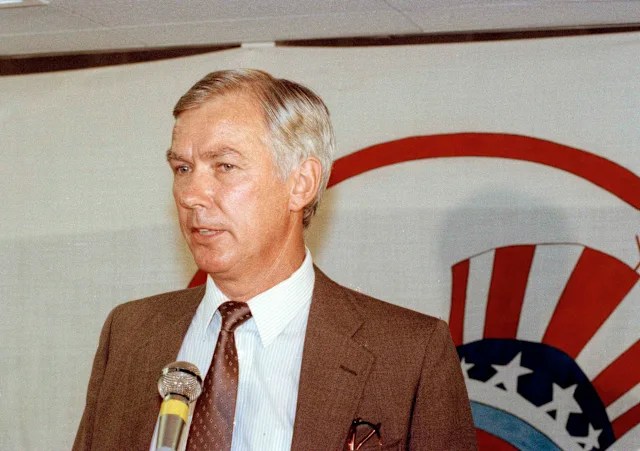
The individuals who deserve the most credit for the success of the ‘98 Yankees, though, were the men in the team front office, specifically General Managers Gene “Stick” Michael (1990-1995) and Bob Watson (1996-1997), and… to some extent, Brian Cashman (took over GM role in February of 1998). Through a series of draft picks, long term planning, and short term fixes, these executives managed to create the best baseball team in most of our lifetimes. The irony is that Michael and Watson weren’t even in their roles for a long amount of time and almost no casual fan knows who they even are. Still, let’s take a look at some of their ingenious transactions that made the 1998 Yankees a team that lives in baseball immortality.
Let’s begin with the batting champion, himself, Bernie Williams. In 1985, even before Michael took the GM role, Bernie was signed by the Yankees on the earliest date they legally could, his 17th birthday. Over the ensuing years, many MLB teams approached Michael and tried to tempt him into trading the Puerto Rican switch hitter. However, the “Stick” stuck to his guns and, instead, brought Williams on slowly in order to fully develop his skills. He was also instrumental in drafting both Andy Pettitte and Jorge Posada in 1990. The Yankee GM, however, made his most famous draft selection in 1992 when he drafted a skinny shortstop from Kalamazoo, Michigan, Derek Jeter. Going 6th overall, several clubs passed on Jeter’s talent, but Michael knew a star when he saw one. “The Stick’s” most significant trade was when he acquired Paul O’Neill from the Reds in 1993. O’Neill was the hometown player in Cincinnati, but quickly found that his exceptional defensive glove and left handed power were more akin to playing in the Bronx. 1995 was also the year that Mariano Rivera (another 1990 pickup) was convinced by the Yankee front office to become a reliever instead of a starter. Yeah, the rest was history. Michael was fired in October 1995, but, almost instantly, returned to the Yankees as their Director of Scouting.
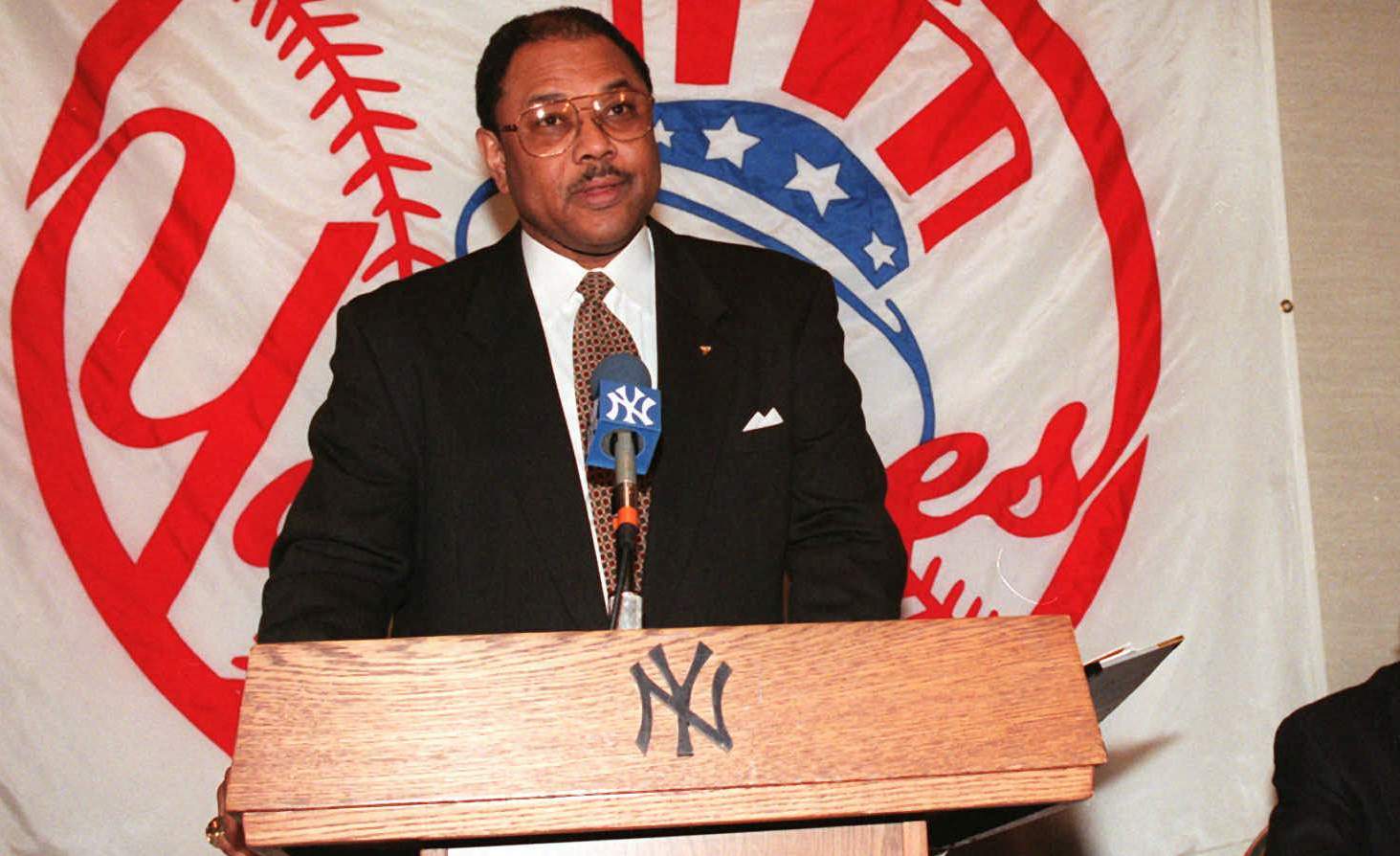
Bob Watson was then handed the keys to the kingdom, and proceeded to continue in Michael’s visionary footsteps. His first move was hiring Joe Torre, a National League manager of 14 years that had never stepped foot in the World Series. That was about to change…. He then signed David Cone as a free agent in 1995. Cone was a respectable pitcher who had been on some great Mets teams and had won a World Series with the Blue Jays. Watson also secured the contract of David Wells, who had played for the Orioles in 1997. His most famous trade was in late 1995 when he acquired both Tino Martinez and Jeff Nelson from the Seattle Mariners. Tino became a slick fielding first basemen with left handed power that was perfect for Yankee Stadium and Nelson went on to be a wonderfully effective set-up man for Rivera. Before he vacated his duties in early 1998, Watson signed reliever Mike Stanton and traded Kenny Rogers to the Athletics for a player to be named later. That player, not even significant enough to be mentioned in the original trade, was 1998 World Series Most Valuable Player, Scott Brosius.
Current Yankee GM Brian Cashman took the reins in the winter of 1998 and deserves credit for two moves. He traded for Minnesota Twins second baseman Chuck Knoblauch, a hard nosed, effort driven member of the ‘98 team. Cashman also was the one who signed “El Duque” from Cuba after he had defected (which, ironically, was only possible because of Cone being injured by the previously mentioned dog bite). Simply put, under Michael the Yankees abandoned their failed 1980s strategy of trading for a large number of players and, instead, focused on developing athletes in their farm system. Under Watson, they made the trades and signings necessary to supplement their homegrown players and push them to winning a championship. Under Cashman’s first year, the Yankees added key pieces to an already strong roster. All of this planning, all of these deals, all of these contract negotiations led to the best New York Yankee team since the Roaring Twenties.
No Headlines: Baseball’s Incredible 1998 Season
Despite the fact that they were having one of the best seasons in MLB history, the ‘98 Yanks rarely dominated the headlines. Yes, a team that won more games than any other since the dawn of baseball was not even in the major story in that season’s sporting news. There was a lot happening in the 1998 term that bears taking a greater look at. For starters, the Yankees weren’t the only team to win over 100 games during the regular season. Their old foes the Atlanta Braves also registered a very impressive 106 victories (there’s even been a song written about them). Likewise, the Houston Astros led by the trade deadline acquisition of Randy Johnson, also won 102. Additionally, the MLB welcomed two expansion teams prior to the season: The Tampa Bay Devil Rays and the Arizona Diamondbacks. How these brand new clubs were playing was very closely followed by sports fans throughout the country.
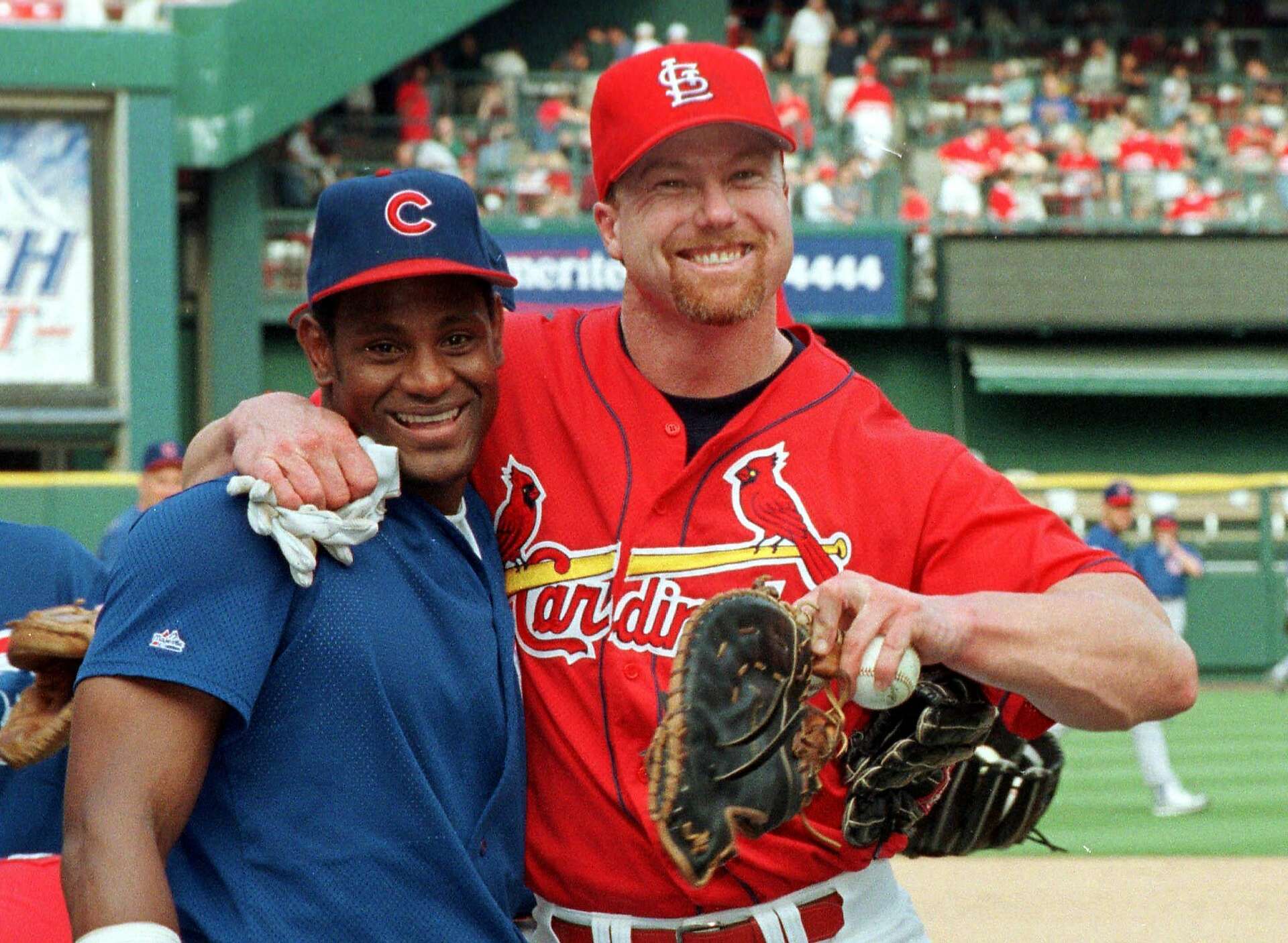
However, the spectacle that really stole front page news during the summer of ‘98 was the incredible chase to break Roger Maris’ home run record. At various times throughout the season, Mark McGuire of the Cardinals, Sammy Sosa of the Cubs, and Ken Griffey, Jr. of the Mariners were all on pace to break Maris’ mark of 61 HRs in 1961. In June, Sosa made history by hitting 20 long balls, the most by any player in a calendar month. Nevertheless, it was Mark McGuire who ended up breaking the 37-year old achievement when he hit his 62nd round tripper on September 8th, with three weeks still to go in the season! “Big Mac” eventually slugged 70 HRs to set a new record and Sosa finished with 66 himself, not too shabby. 1998 also marked the first time in baseball history that four players hit 50 or more four baggers in the same season (McGuire, Sosa, Griffey with 56, and the Padres’ Greg Vaughn with 50.) As if all of these feats weren’t enough, a 20-year old Kerry Wood tied another MLB record by striking out 20 batters in a single game on May 6th. Knowing all of this, it’s not surprising that many writers and fans believe that 1998 was the greatest year in the history of the sport. And there were the Yankees, right in the middle of it. Playing second fiddle to McGuire and Sosa never rattled them. They liked things that way, they weren’t flashy or a team that craved to be on the cover of Sports Illustrated. The team wanted just one thing: to win, and win they most certainly did.
Where It All Began…1997 Failure
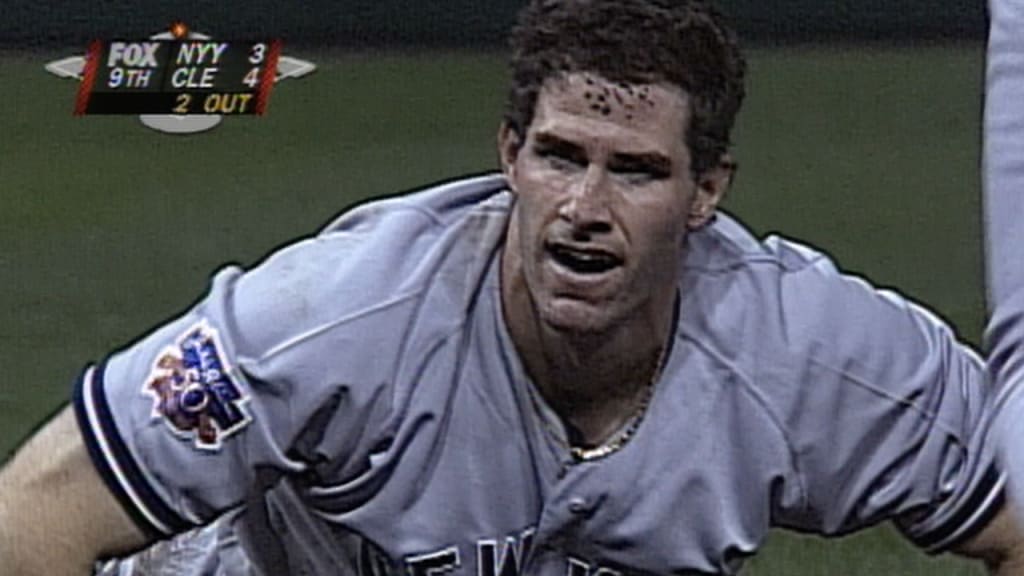
In writing any account of the ‘98 Yankees, one needs to look at where the motivation came for Bob Watson and Brian Cashman to further build up the team. Or when the drive from the individual players to perform at a high level intensified. Well, some of the greatest success stories in life rise from the ashes of horrible failures. In 1997, the Bronx Bombers were the defending champions, and they believed they had all the tools necessary to repeat. They even won more regular season games in ‘97 than they had the year prior, but lost the division to the Baltimore Orioles. This placed them in a first round matchup with the Indians that went to a decisive Game 5 in Cleveland.
Still, the Yankees didn’t sweat things, they had won all eight road games in the ‘96 playoffs and were still the odds on favorite to advance from this contest. However, rookie Jaret Wright outdueled Andy Pettitte and, despite a last gasp double by Paul O’Neill, the Yankees still lost the game and were thus eliminated. O’Neill, who had battled an incredible .421 during the series, was congratulated on his performance post game. “It doesn’t matter”, he said, “We lost.” Tino Martinez later reflected “In that moment we realized it wasn’t easy to win the World Series.”
Jeter also stated “You don’t only have to have a good team, but to win the World Series, you have to play well at all of the important moments.” In reading this dialogue, you get a sense that the Yankees ended the ‘97 season with a bad taste in their mouths. They knew how good they were and that they were more than capable of winning another World Series. This playoff series against Cleveland served to motivate the players, the coaching staff, and the management even more and allowed them to soar to new heights the following Spring.
1998: The Regular Season
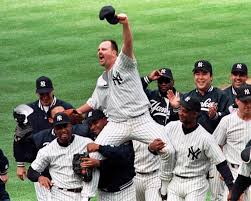
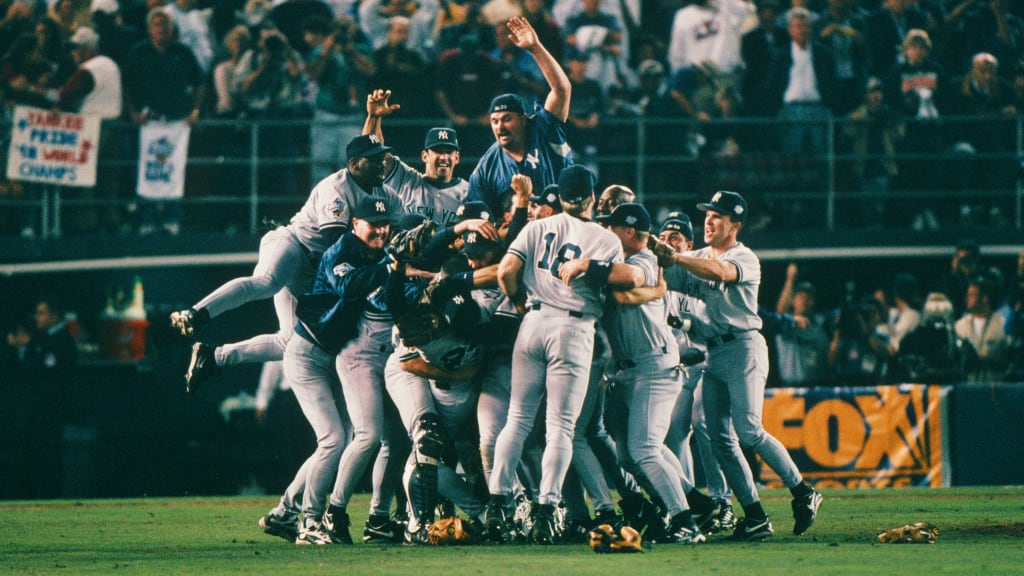
Now, let’s discuss the fabled 114 win regular season. Things didn’t start off the way most people would assume. The Bombers, who began the year on the west coast, ran into several postponements, lost their first three contests, and had a record of 1-4 after five games. After this rough start, there were some who were fearful. David Cone later said “We were afraid that somebody might get fired, or that somebody might get traded.” Fortunately, it didn’t take long after that for the team to start turning things around. They won their next eight matchups, including a wild 17-13 Yankee Stadium Opening Day victory against the A’s. This stretch eventually reached 22 wins in 24 total games as the Yankees reached first place in the AL East at the end of April and never looked back. On Sunday, May 17th (Beanie Baby Day at the Stadium), David Wells pitched the 15th perfect game in baseball history and only the second ever by a Yankee (Don Larson).
The Squad rolled into June, taking 3 out of 4 from the Braves in a much ballyhooed rematch of the ‘96 Fall Classic. On June 10th, Tim Raines made his own history by stealing his 800th base in Montreal. A 10-game win streak and a sweep of the Orioles left them with a 61-20 mark going into the All-Star break. They won another nine consecutive games in August and clinched the AL East at Fenway Park on September 9th. In typical ‘98 Yanks fashion, they ended the regular season on a high note as well, with 7 straight wins. When the smoke cleared in late September, Joe Torre’s team had achieved one of the most dominant April to Septembers of any team that had ever suited up. But now came the real challenge. The postseason. The place where they had slipped up the year before…….
1998: The Postseason
“It don’t mean a thing without the ring.” This was the slogan and rallying cry of the 1995-1996 Chicago Bulls. During their regular season, they had set the NBA record by going 72-10. However, they adopted this motto to demonstrate that what happens in the regular season doesn’t really matter unless you’ve come through in the playoffs. Needless to say, Michael Jordan, Scottie Pippen, and the gang did go onto win the NBA Finals that year and this is why we remember that special Bulls team thirty years later. Likewise, we probably wouldn’t be still discussing the ‘98 Yankees unless they had similar success in October. The playoffs came and, for the second time in three seasons, they faced off against the Texas Rangers in the first round. In 1996 when these two sides met, the Rangers won the first game and Juan Gonzalez put on a clinic during the entire series. This time around, there was no such drama. What ensued was one of the best pitched playoff rounds in baseball history. The Yankees swept the Texas team, never trailed, and only gave up one run in three games. Yeah, the men in pinstripes weren’t following around.
Next came the American League Championship Series, and a rematch from the year before with the Indians. After triumphing in Game One, a Chuck Knoblauch mistake in Game Two, and a barrage of Cleveland homers in the third game, left the Yankees in the largest hole they’d been in all season. Down two games to one to the team who seemed to be making a habit of destroying their dreams. However, “El Duque” pitched a gem in Game 4 and the Bronx Bombers never looked back from there, winning the next three games and their second pennant in three seasons.
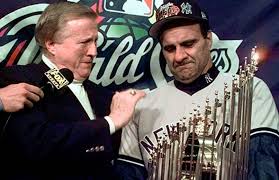
Then, came the World Series. Many people expected things to unfold how they did in ‘96 and for the Yankees to face the Braves (Rest In Peace, Ted Turner). However, the upstart San Diego Padres beat the team from Atlanta in six games and won the National League Championship. Making only their second ever World Series appearance, the west coast team were heavy underdogs but got out to a lead in Game 1. However, dramatic home runs by Knoblauch and Martinez sealed a Yanks win. The AL side had no such trouble in Game 2, and rolled to victory behind a Jorge Posada round tripper. Back home in San Diego, it seemed as if the Padres would take Game 3, but two Scott Brosius dingers, one off acclaimed closer Trevor Hoffman, won things for the Yankees, who cruised to victory again the next night to clinch the sweep and take home their 24th World Championship. John Sterling (Rest In Peace) sealed the win with his iconic cry “Ballgame over! World Series over! Yankees win! Theeeeeee Yankees win! The celebration commenced into the Southern California night.
Conclusion
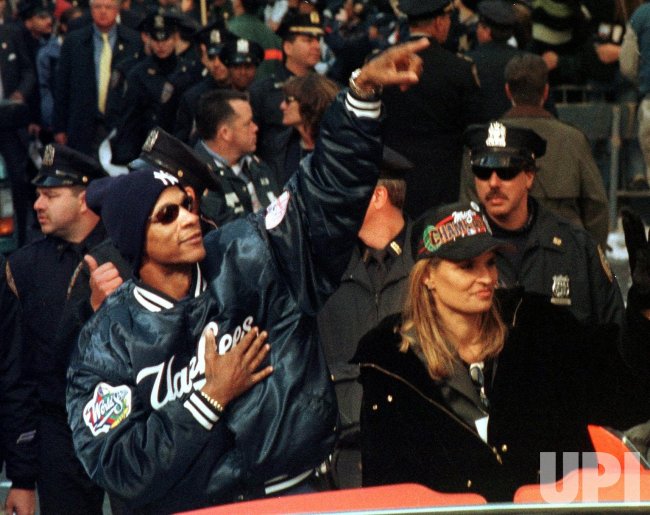
The 1998 New York Yankees were the epitome of the word “team.” If you looked up that word in the dictionary, you’d probably find a picture of this group. Derek Jeter said: “I’m a little bit biased, but I’d put that team up against any team that’s ever played the game.” Tim Raines added: “It wasn’t about who was the best. It wasn’t about who got the most notoriety. It was about the team.” They weren’t loud, didn’t crave the limelight, and you wouldn’t see them in the tabloid section of any newspaper. Hell, you rarely saw them on the cover of most sports sections. They were simply a stacked club with virtually no holes or weaknesses, who all had one common goal: to win the World Series. Not to break the home run record. Not to win American League MVP. To win the game’s truly greatest prize. The only trophy that fans in New York truly care about. That was what owner George Steinbrenner desired most, and his leadership goal was implanted into the very DNA of every player in pinstripes. A casual fan of the game may remember ‘98 as the year of McGuire and Sosa, but the real kings of baseball that season were the best New York Yankee team in most of our lifetimes.
 Yankee In Exile
Leave a comment