
2026 World Cup
We are just about ready for the start of the 2026 World Cup here in North America. It will be an event of many firsts including the expansion to 48 total teams and having a 32 team knockout stage. It will also mark the first time the World Cup Final will have a halftime show. Perhaps the biggest story going into this year’s edition, however, is the extremely high ticket prices for even the most mundane group stage contests. It’s truly a brave new world out there and FIFA has chartered a course toward publicity and profit. We can only hope, though, that this year doesn’t bear the tragedy and heartbreak of the last time soccer’s biggest stage was hosted by the USA. This week, we’re going back to the year 1994. The Lion King had just come out, and the OJ Simpson situation was captivating the nation. America was hosting the World Cup for the first time, and there was much excitement around this event. No one expected much from team USA, but they did score a massive win against a country that was heavily favored to beat them. However, one player from that country ended up paying the ultimate price for their loss in said game. This is the story of Colombian Andres Escobar.
1986 World Cup
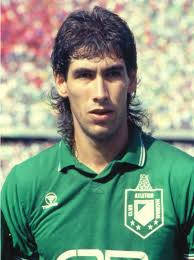
Our story really starts all the way back in 1974, when FIFA selected Colombia to be the host country of the 1986 edition of the World Cup. It would be the first time “Gateway to South America” had ever put on an event like this. The announcement was met with much joy and partying in the streets. However, in 1982 (just four years out from when they were due to host it), Colombian president Belisario Betancur stated that the country lacked the economic capacity to meet all of FIFAs hosting requirements. You see, the World Cup had recently expanded from 16 to 24 teams (and now, it’s even doubled to 48) and this meant more games, more fields, more security personnel, more hotels, etc.) would all be needed. Betancur claimed that this expansion was not part of the original 1974 agreement. He also stressed that the Colombian government didn’t want to spend taxpayer money on new stadiums and airport upgrades.
Interestingly enough, the USA very much wanted to be a replacement host in 1986, but, ultimately, FIFA gave the event to Mexico who, at the time, had just hosted the 1970 World Cup and was seen as the more reliable option. USA was then awarded the cup in 1994. However, the decision for Colombia to back out of hosting the World Cup caused a tremendous amount of disappointment in the country and many football fans were heartbroken. To this day, Colombia has never hosted a World Cup game.
The Lead Up To 1994: The Colombian Juggernaut
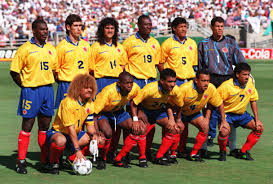
Fast forward several years later, and the pain of the lost World Cup bid had begun to wane. Why? Because many felt that Colombia were fielding a very strong team in 1994. They had won their World Cup qualifying group, beating out the likes of Paraguay, Peru, and powerhouse Argentina. In fact, they thrashed Argentina 5-0 in Buenos Aires during these stages. To defeat a team that had been to the previous two World Cup finals in that fashion was a statement to the world that Colombia had arrived. In fact, between 1991 and 1993, their team had won 25 out of 26 matches played. This success went hand in hand with the rise of teams in the Colombian domestic football league, with teams such as America de Cali and 1989 Copa Libertadores (South American Champions) winners Atletico Nacional. There were even those outside of the country that had the ultimate confidence in Colombia. Brazilian soccer legend, and three time world cup winner Pele, publicly chose Los Cafeteros over his own homeland to be the ‘94 world champions. Likewise, Dutch icon Johan Cruyff also selected them as his most likely winners. The stage was set for Colombia to finally make their mark on the world soccer stage. However, despite all the hype, there were allegedly other things going on behind the scenes in the lead up to June 1994.
The Alleged Cartel Involvement
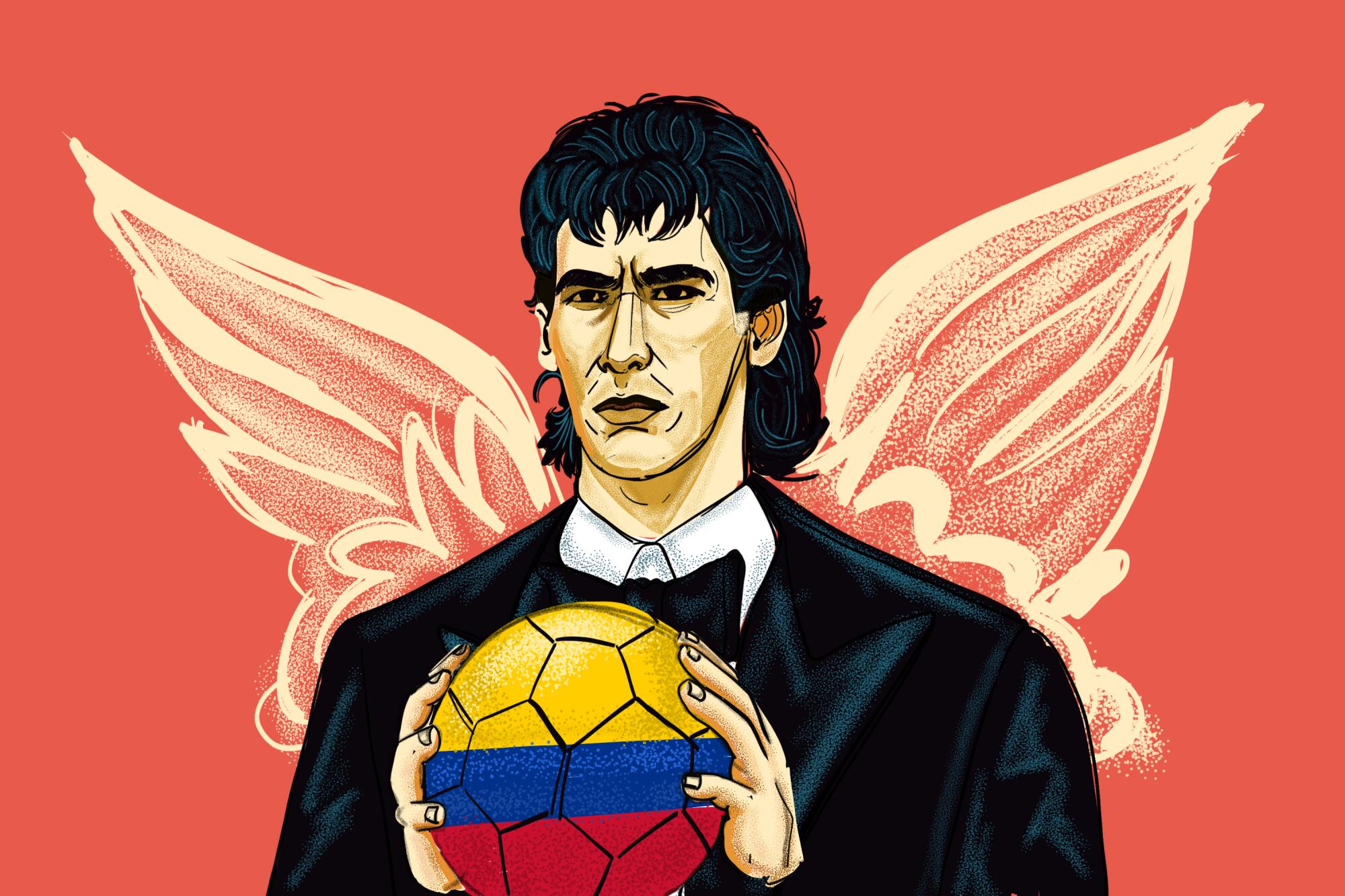
It is important to note that much of the information in this section is alleged and has never been proven. Make of it what you will. It was beginning to become apparent that one of the reasons for the increased success of teams in the Colombian domestic league was because they were being backed with drug lords and cartel money. Notorious kingpin Pablo Escobar was said to be heavily involved with the aforementioned Atletico Nacional club. In fact, the 1989 league season was abandoned after Escobar reportedly had a referee murdered after a blown call. Of course, this cartel influence over the club teams led to rumors that the same syndicates controlled the national team and exercised their clout over manager Francisco Maturana. When central midfielder Jaime Gomez Jaramillo (an early national team selection) was suddenly dropped from the team in favor of Herman Gaviria, public sentiment held that this was a move directly ordered by the cartel. In addition to controlling Los Cafeteros, stories began to break out about the huge amount of money different drug traffickers had riding on the success of the team. The situation was given a nickname: “Narco-Soccer.” With the power exercised and big amounts of money on the line, these drug groups were not going to stand for failure of any kind…
Heartbreak At The Rose Bowl
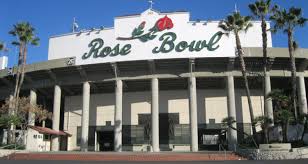
Colombia was drawn into Group A along with Romania, Switzerland, and the host country, the USA. Their opening match was June 18th against Romania at Pasadena’s Rose Bowl. Most pundits agreed that the team from South America were heavy favorites in this game. Instead, Maturana and his crew suffered utter shock as they lost the game 3-1 despite being much more dominant in possession. This was stunning to say the least and rumors began that some members of the squad received death threats from the cartel post-game. However, it was only one loss. Heck, both Spain (2010) and Argentina (2022) have both lost their first WC matches in recent times and have still gone on to lift the trophy. That same fate could have very well happened to Colombia. There was just one problem: their next match would be against the host country, who brought legions of fans to the June 22nd matchup, also taking place at the same Los Angeles stadium.
The Own Goal Heard Around The World
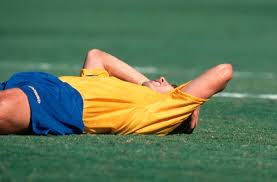
Against the USA, again Colombia began the game as the better team. However, a 35th minute goal would change the face of the game, the World Cup, and the country of Colombia itself. It was at that time that a John Harkes (USA) cross was inadvertently deflected into goal by Colombian defender Andres Escobar (no relation to Pablo). Another American goal in the second half sealed the deal and a 90th minute consolation goal by Los Cafeteros was not enough to mount a comeback. Ironically enough, Colombia went on to win their final World Cup game on June 26th against Switzerland at Stanford Stadium. However, it didn’t matter. They were now going home after the group stage. Yes, a team that had won their WC qualifying group and had been the favorite of many to win the entire competition, was now going home after the initial round. Pain, loss, and heartbreak was felt by the people of Colombia. For the drug lords, the torture also extended to their pockets, having apparently lost big amounts of money that they had gambled. A scapegoat was needed, and they looked no further than the man who had put the ball in the back of his own team’s net.
What Did Andres Escobar Do After Colombia Was Eliminated?
Believe it or not, the man who scored the infamous own goal was offered not one, but two chances to remain in the USA for a while after Colombia were bounced from contention. He had a proposal to become a commentator and a pundit for the knockout stages and could have also gone to meet his brother’s family in Miami. Instead, Escobar elected to return to his native land immediately. The reason? According to his sister, Maria, he stated “I want to go back to Colombia to show my face.” This was a decision that would prove fatal in the end. In the waning days of June, Escobar authored an article in mainstream Colombian newspapers “El Tiempo” and “El Pais”, calling for calm and asking respect for the players after their country’s untimely elimination. To quote the Colombian defender’s article: “A big hug to everyone, and I want to say that [playing in the World Cup] was a phenomenal, rare, opportunity and experience, unlike anything I’d ever felt before. See you soon, because life doesn’t end here.” The final sentence is bone chilling. It would turn out that for Andres Escobar, life was about to end in the most tragic fashion.
July 2, 1994
This was, ironically, the date that the first world cup knockout round games were played in that tournament. It was also Andres Escobar’s first public appearance since scoring the own goal that led to Colombia’s WC elimination. He, along with his girlfriend, a childhood friend, and several others went out to a nightclub in Medellin. According to eyewitness accounts, Escobar was approached and taunted inside the club by brothers Pedro David Gallon and Juan Santiago Gallon. Then, as the Colombian football player was leaving, he was shot by a man named Humberto Castro Munoz in the parking lot. People that were there insist that, as Munoz was shooting Escobar, he screamed out the words “Gol, Gol, Gol!.” This impersonated soccer commentators when a team scores, and would have been in direct reference to his own goal against the USA. Unfortunately, Escobar died almost immediately, and Munoz confessed to his murder the next day.
Legal Aftermath
It became very apparent, very quickly, that Munoz had direct connections to the Gallon brothers, and that all three of them had direct connections to the cartel. Even though it has been alleged (and widely believed worldwide) that Escobar’s murder was ordered by the cartel, it has never been proven in court. Munoz was sentenced to 43 years in prison for the crime. However, shockingly, he was released in 2005 after serving a mere 11 years for murdering Escobar! Rumors of cartel bribery to secure the release swirled. Andres Escobar’s father, Dario, said of the parole: “Frankly, I believe that there is no justice in Colombia. Colombian justice for me, is a deception because it deceives the people and the family by telling them that he was sentenced to 43 years and now this murderer is released.” As far as anyone knows, Munoz is still walking the streets a free man to this day. As for the Gallon brothers, they were slapped with a “cover-up” charge, not the much worse “conspirator” ruling. They both received a sentence of 15 months……that’s it. In 2015, the Gallons were barred from ever entering the USA on account of their known ties to drug trafficking. On February 6th of this year, Juan Santiago Gallon was shot and killed while in Mexico, another one of this year’s WC host countries.
Emotional Aftermath
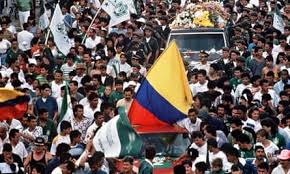
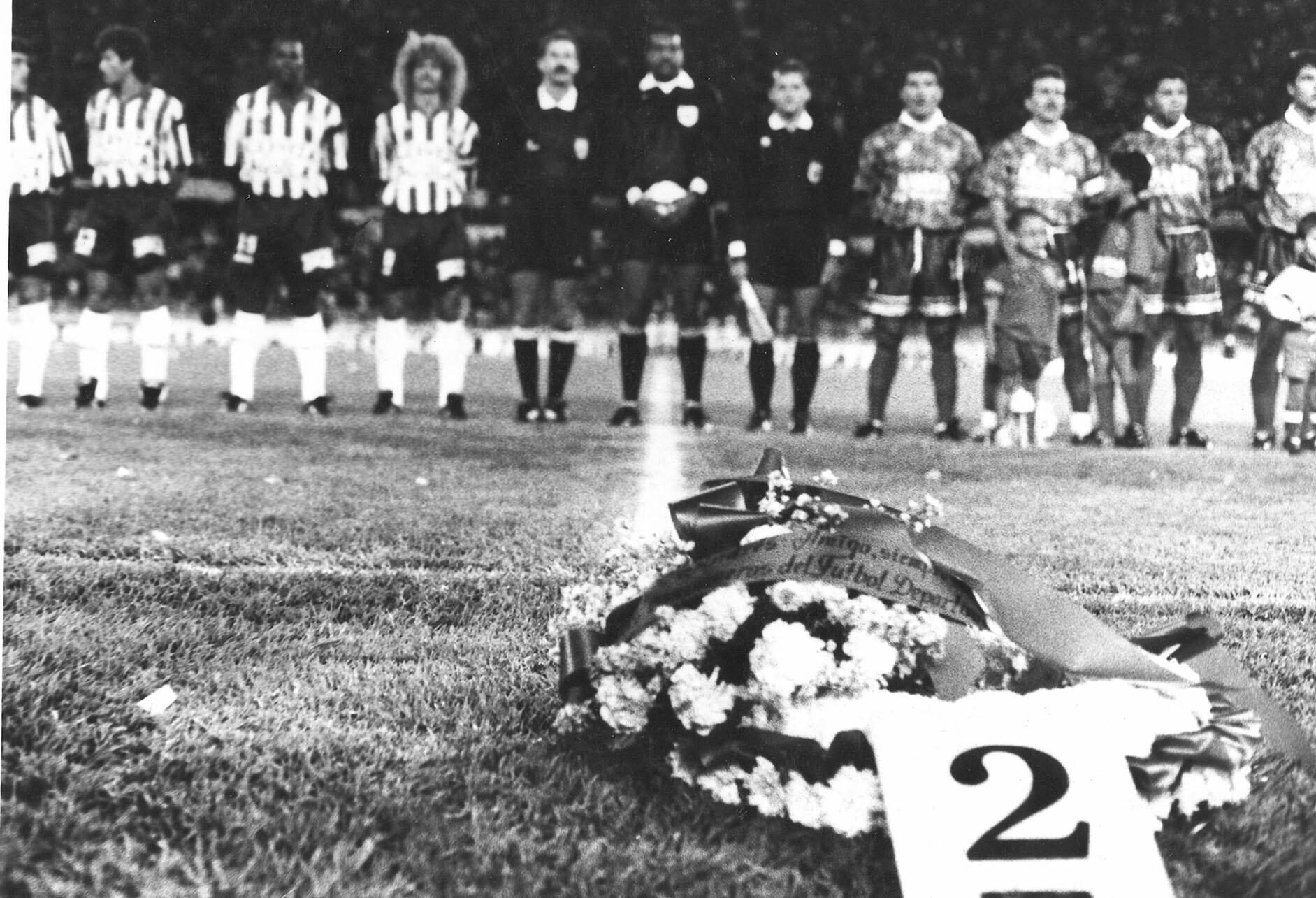
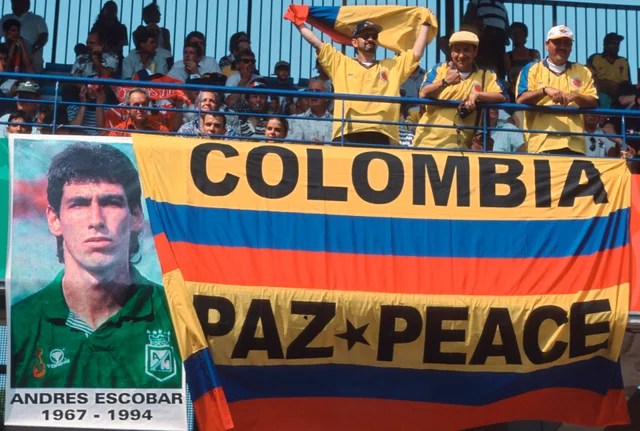
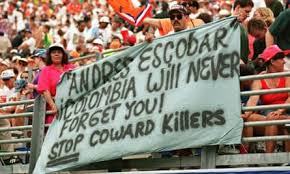
Escobar’s murder shook the footballing world and served to put a damper on the rest of the World Cup. A funeral for the Colombian defender took place very soon afterwards. The day succeeding his death, in fact. It is estimated that, even on such short notice, nearly 120,000 total people attended to pay their respects. Chants of his name could be heard around stadiums throughout the USA for the rest of the tournament. And, on July 4th, Independence Day for Americans, a famous sign was held up during a round of 16 game at Orlando’s Citrus Bowl. It read: “Andres Escobar, Colombia will never forget you! STOP coward killers.” American John Harkes, the man who supplied the cross that Escobar sent into his own goal, reflected on hearing the news of the Colombian’s murder. “The day itself became a blur, maybe it’s because you try to push it away, you don’t want to hear about it. And in the hotel that night, you try to focus on your game. But you can’t. You try to find answers, but you can’t. Andres Escobar was only 27 years old with a girlfriend that he was due to marry in the fall of 1994. There were even some transfer rumors that had reigning European champions AC Milan ready to sign him. He never received either opportunity. His life was cut short by cartels and gambling, not because of the on field mistake he made. Perhaps the lack of justice is what hurts the most, as Escobar’s father still campaigns against his country’s legal system to this day. Our thoughts and prayers go out to Andres Escobar, his family, and his friends. Spare him a thought as you watch the World Cup this year.
 Yankee In Exile
Leave a comment